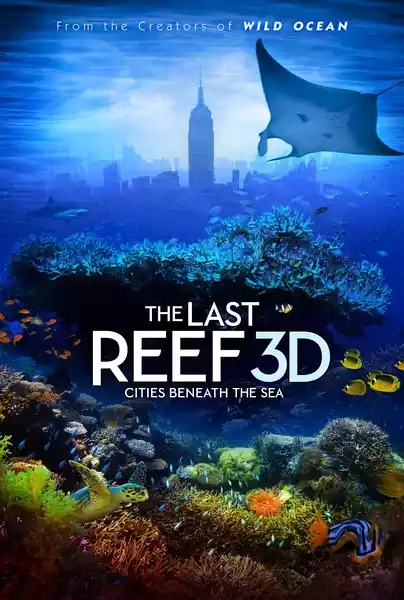
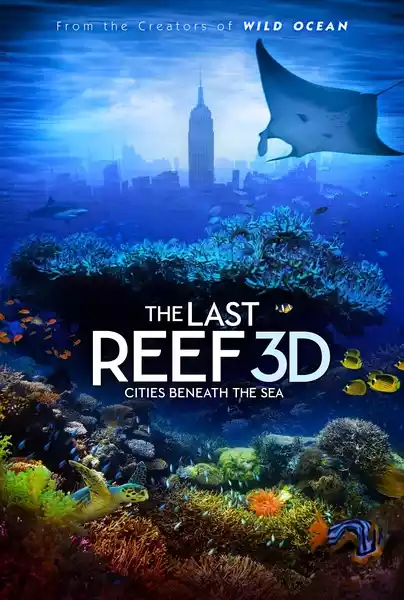
最后的珊瑚礁 The Last Reef: Cities Beneath the Sea(EN)Subtitles
| SRT Subtitles download |
1 00:00:02 The kitchens of today can be more beautiful,
2 00:00:04 because this year, there's a better...
3 00:00:07 Oh, what a relief it is...
4 00:00:11 Charlie!
5 00:00:44 On July 5, 1946,
6 00:00:46 French designer Louis Reard paraded a model
7 00:00:49 down a Paris runway in a two-piece bathing suit
8 00:00:50 that he called a bikini.
9 00:00:53 Reard spontaneously dubbed it "bikini"
10 00:00:55 during a week in which world headlines were occupied
11 00:00:57 by nuclear tests conducted by the United States of America
12 00:01:00 off the Bikini atoll in the Pacific.
13 00:01:02 Wearing a bikini actually created
14 00:01:04 more cries of outrage and scorn
15 00:01:06 than the act of exploding an atomic bomb.
16 00:01:12 It's a new era of undersea exploration,
17 00:01:15 with the self-contained underwater breathing apparatus.
18 00:01:17 If the bikini won't get you into the water,
19 00:01:20 perhaps the aqualung will do the job.
20 00:01:22 Those denizens of the deep had better watch out,
21 00:01:25 as man's dominion now extends both above and below the waves.
22 00:01:33 In 1946, in the waters
23 00:01:35 around the remote Pacific island of Bikini,
24 00:01:38 coral reefs were demolished and pulverized
25 00:01:41 by the test explosions of multiple nuclear bombs.
26 00:01:45 Since radioactive fallout contaminated the island,
27 00:01:48 the reefs of Bikini were to be left to their own devices,
28 00:01:52 with no human contact for over 50 years.
29 00:01:56 But in that time, something wonderful happened.
30 00:02:01 The reefs returned.
31 00:02:38 The reefs of Bikini are testament
32 00:02:40 to the resilience of nature.
33 00:02:43 But the reefs of the world now face a far greater threat.
34 00:02:48 Think of a reef as a city,
35 00:02:50 a city beneath the sea.
36 00:04:57 Like our cities, reefs offer sustenance and shelter
37 00:05:01 for their diverse communities.
38 00:05:03 They protect an incredible variety of creatures.
39 00:05:08 But our cities are altering the chemistry of the ocean,
40 00:05:11 the very chemistry the reef-builders rely upon.
41 00:05:21 Coral comes in so many different shapes and forms.
42 00:05:28 For years, people were confused
43 00:05:29 as to whether it was a rock formation
44 00:05:33 or a plant.
45 00:05:36 In fact, coral reefs are colonies
46 00:05:39 of thousands of tiny animals called polyps,
47 00:05:43 each colony sharing a communal skeleton.
48 00:05:50 Living within the coral polyp is a kind of algae.
49 00:05:56 Like a plant, the algae absorbs the sun's energy
50 00:05:59 and passes it on to the coral.
51 00:06:02 In this way, coral can get
52 00:06:04 as much as 90% of its energy from sunlight.
53 00:06:09 But we need more than energy to build our cities.
54 00:06:13 We need bricks and mortar, stone and cement.
55 00:06:19 The reef's building blocks are the carbon, calcium,
56 00:06:22 and other minerals dissolved in seawater
57 00:06:25 or trapped in organic matter.
58 00:06:27 They absorb these elements and create calcium carbonate.
59 00:06:32 It's not unlike the way we grow our bones and fingernails.
60 00:06:38 It's an organic factory,
61 00:06:41 using the sun's energy and carbon
62 00:06:43 to build the reef cities.
63 00:06:47 We may think our cities diverse and well populated,
64 00:06:50 but the reefs of the world rival tropical rain forests
65 00:06:54 for their wealth and variety of life.
66 00:06:57 If we look closer, we soon realize how alien,
67 00:07:01 how beautiful these cities really are.
68 00:07:33 Nudibranchs, the slugs of the sea,
69 00:07:37 are just one of an incredible number of creatures
70 00:07:39 that depend upon the reef.
71 00:07:43 They come in an amazing array of shapes and colors.
72 00:07:48 And they're no bigger than your little finger.
73 00:09:00 Flatworms have no respiratory organs.
74 00:09:04 They absorb oxygen and expel carbon dioxide
75 00:09:07 by a process of diffusion,
76 00:09:09 so their bodies are paper-thin.
77 00:09:42 Elsewhere on the reef,
78 00:09:44 clownfish shelter within the poisonous tentacles
79 00:09:46 of a giant sea anemone.
80 00:09:50 Unlike other reef fish,
81 00:09:52 they are immune to the anemone's sting.
82 00:09:55 Away from this protection,
83 00:09:57 a clownfish might quickly be devoured by predators.
84 00:10:01 In return, the clownfish eats
85 00:10:03 the anemone's waste and leftovers.
86 00:10:06 And by being fiercely territorial,
87 00:10:09 it even helps ward away the anemone's predators.
88 00:10:13 This is one of the reef's many examples of symbiosis,
89 00:10:18 a relationship between two different creatures
90 00:10:21 that benefits each of them.
91 00:10:32 There are other methods of defense on the reef,
92 00:10:34 equally creative.
93 00:10:36 Camouflage, for example.
94 00:10:51 The crocodile fish almost completely disappears
95 00:10:54 amongst the sand and stones in the shallows
96 00:10:56 as it waits for unsuspecting prey to pass by.
97 00:11:08 Other fish blend in with the coral,
98 00:11:10 like the scorpion fish,
99 00:11:13 or hide beneath the sand.
100 00:11:29 Coral reefs support over one quarter
101 00:11:31 of all the world's marine species,
102 00:11:34 and that includes a vast array of mollusks.
103 00:11:38 There are more species of mollusk
104 00:11:40 than all species of bird, reptile, and mammal combined.
105 00:12:48 Grooming may have become
106 00:12:50 something of a ritual in our cities,
107 00:12:52 but is a vital part of our lives
108 00:12:53 as far as health and hygiene is concerned.
109 00:12:56 We even use a form of grooming
110 00:12:59 that directly mimics life on the coral reef.
111 00:13:21 Cleaning stations attract much larger animals
112 00:13:24 to the shallow waters of the reefs.
113 00:13:27 Small fish operate the stations.
114 00:13:29 They groom the larger ones
115 00:13:30 by nibbling away parasites or dead skin.
116 00:14:12 These manta rays approach the reef at high tide,
117 00:14:15 in search of the cleaning station.
118 00:14:18 It's a predictable timetable that can attract other visitors.
119 00:15:12 Coral grows and builds upon its own skeletal remains
120 00:15:17 in whichever direction will give it light and warmth.
121 00:15:20 As a result, reefs can take many different forms.
122 00:15:23 They follow coastlines.
123 00:15:27 They surround rising or falling mountains.
124 00:15:37 They can become atolls around sunken peaks.
125 00:15:48 Reefs offer protection for the islands within,
126 00:15:53 sheltering them from the ravages of the open sea.
127 00:15:59 Throughout time, reefs have created
128 00:16:01 these sheltering cities beneath the sea,
129 00:16:04 in tune with the slow-moving geology of our planet.
130 00:16:09 And they have helped shape it.
131 00:16:12 Both cities have transformed our planet--
132 00:16:16 the reefs over millions of years,
133 00:16:18 our cities in merely hundreds of years.
134 00:16:24 As our cities sprawl and expand,
135 00:16:26 it's possible to see them from space.
136 00:16:31 But the coral cities have been building for millions of years,
137 00:16:35 creating the largest living structures on the planet,
138 00:16:39 also visible from space.
139 00:16:46 As sea levels change, exposed reefs quickly turn to stone,
140 00:16:53 outcrops become rock islands,
141 00:16:55 or over time, they become cliffs or mountains.
142 00:17:01 Limestone formations all over the world
143 00:17:04 were mainly created by reef-builders.
144 00:17:07 Reef limestone even covers the exterior
145 00:17:10 of the Empire State Building.
146 00:17:18 500 miles east of the Philippines, in Palau,
147 00:17:22 ancient reefs have created an archipelago of rock islands.
148 00:17:27 Some of the islands have formed marine lakes,
149 00:17:30 completely cut off from the surrounding ocean.
150 00:17:53 The lakes have trapped whole populations of jellyfish,
151 00:17:56 uniquely separating them from the open sea
152 00:18:00 and their principle predators,
153 00:18:02 so they no longer need their sting.
154 00:18:05 They simply drift around the lake, tracking the sun--
155 00:18:09 just as dependent upon its energy
156 00:18:11 as their relatives on the reef, the coral polyps.
157 00:19:48 Coral atolls create calm lagoons within the circle of the reef,
158 00:19:52 a perfect environment for mangrove forests.
159 00:19:58 Just a few species of tree, adapted to the high density
160 00:20:01 of salt in the warm shallow waters,
161 00:20:03 make up these dense forests.
162 00:20:16 Mangroves harbor nurseries for a variety of marine life.
163 00:20:23 Juvenile lemon sharks shelter within the mangroves,
164 00:20:26 where there is also an ample supply of food,
165 00:20:30 venturing further away from the mangrove roots
166 00:20:32 as they grow in size.
167 00:20:37 So coral reefs can both protect
168 00:20:40 and connect different ecosystems.
169 00:20:49 The lagoons are quite different environments to the coral reefs,
170 00:20:51 with their sandbanks and sea grass.
171 00:21:29 When the sharks reach 12 to 15 years of age,
172 00:21:32 they leave the mangroves and the lagoons behind
173 00:21:35 to assume their role in a complex, interlocking food chain
174 00:21:39 that connects the creatures of the reef
175 00:21:41 to creatures of the open sea.
176 00:21:57 Reef fish tend to grow slowly
177 00:21:59 and live longer than oceanic fish,
178 00:22:02 but their eggs are spawned directly into the open sea,
179 00:22:06 with a less than one percent chance of survival,
180 00:22:09 since they immediately join the ranks
181 00:22:11 of the ocean's greatest food source: plankton.
182 00:22:19 Plankton drifts freely in the water,
183 00:22:22 swept away by the currents flowing in and around the reefs.
184 00:22:27 It's here that feeding stations form.
185 00:22:44 Manta rays and huge shoals of fish gather at these stations
186 00:22:48 to filter the plankton and nutrients from the water
187 00:22:51 as it flows through the channel.
188 00:23:05 The whale shark is one of the largest filter feeders
189 00:23:07 to visit the reef.
190 00:23:19 Out beyond the reef,
191 00:23:20 there is fierce competition among the predators,
192 00:23:23 and yet, they are all still dependent
193 00:23:25 upon the reef in some way.
194 00:23:45 These Atlantic spotted dolphins
195 00:23:47 use the shallows close to the reefs as a place to rest, play,
196 00:23:52 and to teach their young survival tactics
197 00:23:54 for the open sea.
198 00:24:32 So reefs can be seen as a primary source
199 00:24:34 of food in the ocean.
200 00:24:40 They also filter the surrounding water,
201 00:24:44 helping keep a balance of nutrients, minerals,
202 00:24:46 and chemicals beneficial to local fish populations.
203 00:24:51 Without this filtration,
204 00:24:53 disease can quickly spread through the food chain.
205 00:25:30 In the years since the invention of scuba,
206 00:25:32 technology has transformed our lives,
207 00:25:35 but reef life has deteriorated all over the world,
208 00:25:38 for many different reasons.
209 00:25:41 The pollution from our cities, bacteria in our sewage,
210 00:25:45 the removal of mangrove forests, the increasing pressure
211 00:25:50 on local people to find new sources of income
212 00:25:52 has led to the dynamiting of reefs.
213 00:25:55 Even the sun cream we use to protect ourselves while bathing
214 00:25:58 can have a harmful effect on reefs.
215 00:26:02 And then there's bleaching.
216 00:26:05 The algae that lives within the coral
217 00:26:07 and is responsible for much of the coral's energy,
218 00:26:10 also gives coral its color.
219 00:26:12 When sea temperatures rise,
220 00:26:14 the algae is forced to abandon the coral,
221 00:26:17 taking with it the coral's color.
222 00:26:21 This is what is known as "bleaching."
223 00:26:23 Without the algae, the coral can die of starvation.
224 00:26:32 The impact of these combined threats
225 00:26:35 can be fatal for coral,
226 00:26:38 and many reefs around the world have already been lost.
227 00:26:44 Reefs have so much more to offer.
228 00:26:47 We still have so much to learn,
229 00:26:49 secrets to unravel.
230 00:26:53 They are as much a potential source of new breakthroughs
231 00:26:56 in medical science as the world's rain forests.
232 00:27:03 Yet reefs are vanishing five times faster than rain forests.
233 00:27:11 And there is another, much greater threat.
234 00:27:14 At night, the light that glows from our cities
235 00:27:19 requires an enormous amount of energy.
236 00:27:21 And where energy is concerned,
237 00:27:24 there's always a price to pay.
238 00:27:50 Every second, we pump 761 tons
239 00:27:54 of carbon dioxide into the atmosphere
240 00:27:56 in our unquenchable thirst for energy.
241 00:28:00 A third of that amount
242 00:28:02 dissolves into the ocean.
243 00:28:05 Carbon is an essential building block of life.
244 00:28:08 It is locked in rock,
245 00:28:10 buried in fossils,
246 00:28:12 circulating in the atmosphere,
247 00:28:15 dissolved in the ocean.
248 00:28:20 The transition from one form of carbon to another
249 00:28:23 can take millions of years
250 00:28:26 or can be burned in an instant.
251 00:28:32 As CO2 dissolves in seawater,
252 00:28:35 the ocean becomes more acidic.
253 00:28:39 Every aquarium keeper knows that the pH value--
254 00:28:42 the measurement of water's acidity--
255 00:28:44 is vital to the health of any fish tank.
256 00:28:47 So it's easy to understand
257 00:28:49 that a change on a global scale
258 00:28:52 would have a catastrophic effect on life in the oceans.
259 00:28:55 As the sea becomes more acidic,
260 00:28:57 any creature that absorbs carbon
261 00:29:00 to manufacture a new shell,
262 00:29:01 a new skeleton,
263 00:29:03 or a new coral structure,
264 00:29:05 finds it more and more difficult,
265 00:29:07 to the point that growth slows down,
266 00:29:10 and the strength of the shell or skeleton weakens.
267 00:29:13 Entire coral reefs will simply soften,
268 00:29:17 crumble, and disappear.
269 00:29:22 Imagine the outcry
270 00:29:24 if science were to predict the complete extinction
271 00:29:26 of trees everywhere
272 00:29:28 by the middle of the century.
273 00:29:31 This is what the ocean is faced with:
274 00:29:35 the complete destruction of all reefs, everywhere,
275 00:29:38 within our lifetime.
276 00:29:41 And some say the point of no return is already upon us.
277 00:29:49 Losing reefs would have a disastrous effect
278 00:29:51 on the food chain
279 00:29:53 and the rest of the marine environment.
280 00:29:57 Consider, for a moment,
281 00:29:59 how much our lives depend upon life in the ocean.
282 00:30:12 Remember, however, that nature is resilient.
283 00:30:16 Coral spawns its eggs into the sea.
284 00:30:20 The larvae drifts on the ocean currents,
285 00:30:23 some finding their way back to the reef of their origin.
286 00:30:26 Others, however, find new homes,
287 00:30:29 new rocks, new starting places.
288 00:30:33 By spreading to new areas,
289 00:30:35 as the world changes around them,
290 00:30:38 coral has survived over millions of years.
291 00:30:54 Coral will take advantage of any structure.
292 00:30:58 So long as the water is clear and clean
293 00:31:00 and has ample sunlight,
294 00:31:03 they'll create a whole new environment.
295 00:31:11 Relics of war in the Pacific
296 00:31:13 are now home to the reef-builders,
297 00:31:16 slowly transforming them over time.
298 00:31:59 Decommissioned ships are now regularly sunk
299 00:32:02 to encourage the development of new coral reefs.
300 00:32:09 Even statues can form the basis of a new habitat,
301 00:32:12 a new city.
302 00:32:28 All over the world,
303 00:32:29 people are trying to lend the reef-builders
304 00:32:32 a helping hand.
305 00:32:38 But reefs cannot rebuild in an acidified ocean.
306 00:32:48 The very simple chemistry,
307 00:32:49 whereby CO2 raises water's acidity,
308 00:32:52 is unarguable.
309 00:32:56 The call for cutting our carbon emissions,
310 00:32:59 finding greener sources of energy,
311 00:33:02 greener forms of transport,
312 00:33:04 becomes more vital than ever.
313 00:33:07 It's the one way we can all contribute,
314 00:33:10 however indirectly,
315 00:33:12 to the recovery of the world's oceans.
316 00:34:39 The reef-builders will return.
317 00:34:42 They will create new hot spots of diversity in the oceans,
318 00:34:47 new cities beneath the sea...
319 00:34:50 if we let them.
320 00:35:16 Perhaps we can learn from the lessons of Bikini.
321 00:35:20 Coral reefs have an amazing ability to rebuild,
322 00:35:24 and their influence reaches far across land and sea.
323 00:35:52 The last reef is now our responsibility...
324 00:35:56 a responsibility that we cannot ignore.
325 00:36:00 Its future is in our hands.
326 00:36:04 The last reef...
327 00:36:06 is in our hands.