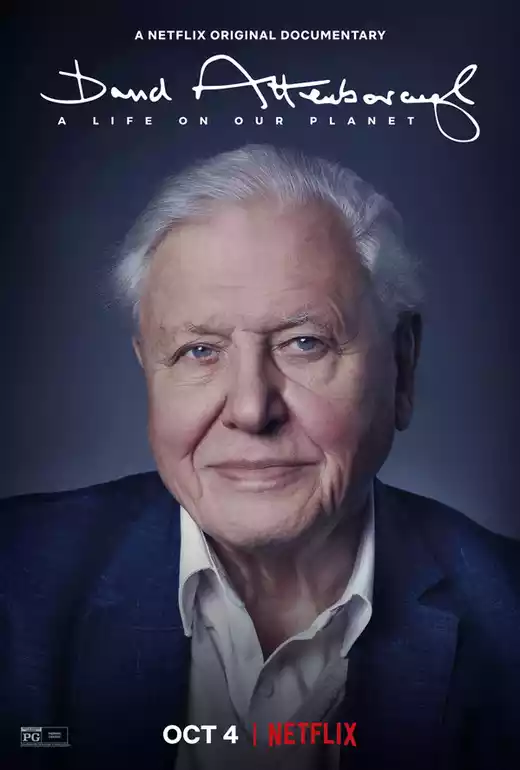
大卫·爱登堡:地球上的一段生命旅程(2020)(EN)Subtitles
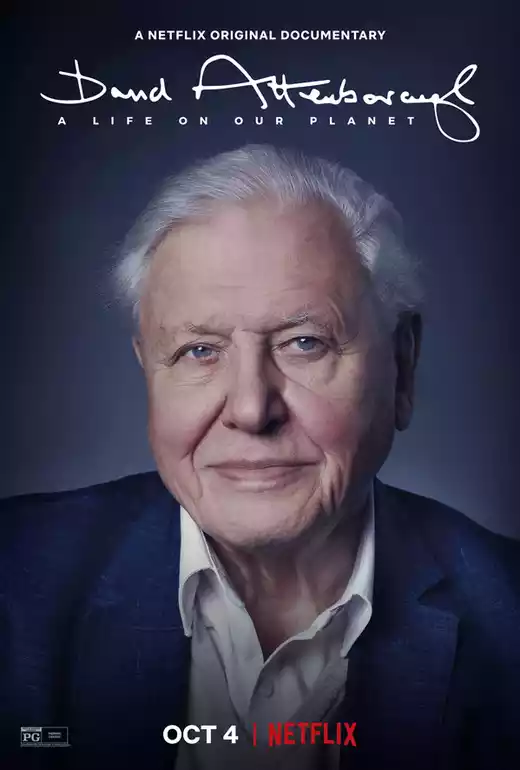
Movie:David Attenborough: A Life on Our Planet (2020)4K
Era:2020
Length:83 minute
Country:
Language:English
Era:2020
Length:83 minute
Country:
Language:English
| SRT Subtitles download |
1 00:01:12 This city in Ukraine was once hometo almost 50,000 people.
2 00:01:18 It had everything a community would needfor a comfortable life.
3 00:01:24 [indistinct chatter]
4 00:01:26 But on the 26th of April, 1986,it suddenly became uninhabitable.
5 00:01:34 The nearby nuclear power stationof Chernobyl exploded.
6 00:01:38 [helicopter hovering]
7 00:01:42 And in less than 48 hours,the city was evacuated.
8 00:01:50 No one has lived here since.
9 00:02:03 The explosion was a result of bad planningand human error. Mistakes.
10 00:02:11 It triggered an environmental catastrophethat had an impact across Europe.
11 00:02:17 Many people regarded it as the most costlyin the history of mankind.
12 00:02:25 But Chernobyl was a single event.
13 00:02:29 The true tragedy of our timeis still unfolding across the globe,
14 00:02:34 barely noticeable from day to day.
15 00:02:37 I'm talking aboutthe loss of our planet's wild places,
16 00:02:41 its biodiversity.
17 00:02:50 The living world is a uniqueand spectacular marvel.
18 00:02:55 Billions of individuals, and millionsof kinds of plants and animals...
19 00:03:00 [birds chirping]
20 00:03:01 ...dazzling in their variety and richness.
21 00:03:06 Working together to benefitfrom the energy of the sun
22 00:03:11 and the minerals of the earth.
23 00:03:15 Leading lives that interlock in such a waythat they sustain each other.
24 00:03:22 We rely entirely on this finely tunedlife-support machine.
25 00:03:29 And it relies on its biodiversityto run smoothly.
26 00:03:39 Yet the way we humans live on Earth nowis sending biodiversity into a decline.
27 00:03:46 [leaves rustling]
28 00:03:51 This too is happening as a resultof bad planning and human error
29 00:03:57 and it too will leadto what we see here.
30 00:04:04 A place in which we cannot live.
31 00:04:12 The natural world is fading.
32 00:04:14 The evidence is all around.It's happened in my lifetime.
33 00:04:18 I've seen it with my own eyes.
34 00:04:21 This film is my witness statementand my vision for the future,
35 00:04:26 the story of how we came to make thisour greatest mistake,
36 00:04:30 and how, if we act now,we can yet put it right.
37 00:04:52 I am David Attenborough, and I am 93.
38 00:04:57 I've had the most extraordinary life.
39 00:05:01 It's only now that I appreciatehow extraordinary.
40 00:05:06 [speaking indistinctly]
41 00:05:11 [Attenborough] I've been lucky enoughto spend my life
42 00:05:13 exploring the wild places of our planet.
43 00:05:18 I've traveled to every part of the globe.
44 00:05:28 I've experienced the living worldfirsthand in all its variety and wonder.
45 00:05:36 In truth, I couldn't imagineliving my life in any other way.
46 00:05:44 I've always had a passion to explore,to have adventures,
47 00:05:50 to learn about the wilds beyond.
48 00:05:52 [exclaiming in surprise]
49 00:05:54 And I'm still learning.
50 00:05:56 Boo!
51 00:05:57 As much now as I did when I was a boy.
52 00:06:02 [birds chirping]
53 00:06:18 It was a very different world back then.
54 00:06:22 We had very little understandingof how the living world actually worked.
55 00:06:30 It was called natural history
56 00:06:32 because that's essentiallywhat it was all about...
57 00:06:37 history.
58 00:06:42 It was a great place to come to as a boy,
59 00:06:44 because this is, um, ironstone workings,but it was disused.
60 00:06:49 All this was absolutely clear, it was...
61 00:06:51 only just stopped being a working quarry.
62 00:07:07 When I was a boy,I spent all my spare time
63 00:07:11 searching through rocksin places like this...
64 00:07:15 for buried treasure.
65 00:07:20 Fossils.
66 00:07:22 It's a creature called an ammonite.
67 00:07:25 And in life the animal itselflived in the chamber here
68 00:07:28 and spread out its tentaclesto catch its prey.
69 00:07:33 And it lived about 180 million years ago.
70 00:07:37 This particular onehas a scientific name of Tiltonicerus,
71 00:07:42 because the first one everwas found near this quarry
72 00:07:46 here in Tilton, in the middle of England.
73 00:07:50 Over time, I began to learn somethingabout the earth's evolutionary history.
74 00:07:56 By and large, it's a story of slow,steady change.
75 00:08:03 Over billions of years,nature has crafted miraculous forms,
76 00:08:08 each more complex and accomplishedthan the last.
77 00:08:15 It's an achingly intricate labor.
78 00:08:22 And then,every hundred million years or so,
79 00:08:26 after all those painstaking processes,
80 00:08:29 something catastrophic happens,a mass extinction.
81 00:08:35 Great numbers of species disappearand are suddenly replaced by a few.
82 00:08:43 All that evolution undone.
83 00:08:48 You can see it. A line in the rock layers.
84 00:08:51 A boundary that marks a profound,rapid, global change.
85 00:08:57 Below the lineare a multitude of lifeforms.
86 00:09:02 Above, very few.
87 00:09:07 A mass extinction has happened five timesin life's four-billion-year history.
88 00:09:15 The last time it happened
89 00:09:17 was the event that brought the endof the age of the dinosaurs.
90 00:09:22 A meteorite impact triggereda catastrophic change
91 00:09:26 in the earth's conditions.
92 00:09:31 75% of all species were wiped out.
93 00:09:38 Life had no option but to rebuild.
94 00:09:44 For 65 million years, it's been at workreconstructing the living world...
95 00:09:52 until we come to the world we know...our time.
96 00:10:05 Scientists call it the Holocene.
97 00:10:14 The Holocene has beenone of the most stable periods
98 00:10:17 in our planet's great history.
99 00:10:19 [birds chirping]
100 00:10:22 For 10,000 years, the average temperaturehas not wavered up or down
101 00:10:27 by more than one degree Celsius.
102 00:10:33 And the rich and thrivingliving world around us
103 00:10:37 has been key to this stability.
104 00:10:44 Phytoplankton at the ocean's surfaceand immense forests straddling the north
105 00:10:51 have helped to balance the atmosphereby locking away carbon.
106 00:10:59 Huge herds on the plains
107 00:11:01 have kept the grasslands richand productive by fertilizing the soils.
108 00:11:12 Mangroves and coral reefsalong thousands of miles of coast
109 00:11:16 have harbored nurseries of fish species
110 00:11:19 that, when mature,then range into open waters.
111 00:11:30 A thick belt of jungles around the equatorhas piled plant on plant
112 00:11:35 to capture as much of the sun's energyas possible,
113 00:11:39 adding moisture and oxygento the global air currents.
114 00:11:47 And the extent of the polar icehas been critical,
115 00:11:50 reflecting sunlightback off its white surface,
116 00:11:54 cooling the whole earth.
117 00:12:00 The biodiversity of the Holocenehelped to bring stability,
118 00:12:06 and the entire living world settledinto a gentle, reliable rhythm...
119 00:12:13 the seasons.
120 00:12:15 [thunder rumbling]
121 00:12:16 [lowing]
122 00:12:23 On the tropical plains,
123 00:12:24 the dry and rainy seasons would switchevery year like clockwork.
124 00:12:33 In Asia, the winds would createthe monsoon on cue.
125 00:12:38 [thunder rumbling]
126 00:12:46 In the northern regions, the temperatureswould lift in March, triggering spring,
127 00:12:52 and stay high until they dipped in Octoberand brought about autumn.
128 00:12:57 [birds chirping and chattering]
129 00:13:02 The Holocene was our Garden of Eden.
130 00:13:05 Its rhythm of seasons was so reliable
131 00:13:08 that it gave our own speciesa unique opportunity.
132 00:13:12 [mooing]
133 00:13:15 We invented farming.
134 00:13:20 We learnt how to exploit the seasonsto produce food crops.
135 00:13:27 The history ofall human civilization followed.
136 00:13:33 Each generation ableto develop and progress
137 00:13:37 only because the living worldcould be relied upon
138 00:13:40 to deliver us the conditions we needed.
139 00:13:46 The pace of progress was unlike anythingto be found in the fossil record.
140 00:13:54 Our intelligence changed the wayin which we evolved.
141 00:14:00 In the past,
142 00:14:01 animals had to develop somephysical ability to change their lives.
143 00:14:08 But for us, an idea could do that.
144 00:14:11 And the idea could be passedfrom one generation to the next.
145 00:14:18 We were transformingwhat a species could achieve.
146 00:14:26 A few millennia after this began,I grew up at exactly the right moment.
147 00:14:35 The start of my career in my 20s
148 00:14:37 coincided with the adventof global air travel.
149 00:14:43 So, I had the privilege of beingamongst the first
150 00:14:47 to fully experience the bounty of lifethat had come about
151 00:14:51 as a result ofthe Holocene's gentle climate.
152 00:15:14 Wherever I went, there was wilderness.
153 00:15:18 Sparkling coastal seas.
154 00:15:21 Vast forests.
155 00:15:25 Immense grasslands.
156 00:15:27 You could fly for hoursover the untouched wilderness.
157 00:15:33 And there I was, actually being askedto explore these places
158 00:15:38 and record the wondersof the natural world for people back home.
159 00:15:44 And to begin with, it was quite easy.
160 00:15:45 People had never seen pangolinsbefore on television.
161 00:15:48 They'd never seen sloths before.
162 00:15:50 They had never seen the centerof New Guinea before.
163 00:15:58 It was the best time of my life.
164 00:16:01 The best time of our lives.
165 00:16:05 The Second World War was over,technology was making our lives easier.
166 00:16:11 The pace of changewas getting faster and faster.
167 00:16:16 [indistinct chatter]
168 00:16:21 [Attenborough] It felt that nothingwould limit our progress.
169 00:16:25 The future was going to be exciting.
170 00:16:28 It was going to bring everythingwe had ever dreamed of.
171 00:16:34 This was before any of us were awarethat there were problems.
172 00:16:52 My first visit to East Africa was in 1960.
173 00:17:01 Back then, it seemed inconceivablethat we, a single species,
174 00:17:06 might one day have the power to threatenthe very existence of the wilderness.
175 00:17:16 The Maasai word "Serengeti"means "endless plains."
176 00:17:21 To those who live here,it's an apt description.
177 00:17:24 You can be in one spot on the Serengeti,
178 00:17:26 and the place is totally empty of animals,
179 00:17:29 and then, the next morning...
180 00:17:31 [bellowing]
181 00:17:32 ...one million wildebeest.
182 00:17:34 [bellowing]
183 00:17:41 A quarter of a million zebra.
184 00:17:43 [snorting]
185 00:17:48 Half a million gazelle.
186 00:17:53 A few days after that...
187 00:17:55 and they're gone... over the horizon.
188 00:17:59 You can be forgiven for thinkingthat these plains are endless
189 00:18:04 when they could swallow up such a herd.
190 00:18:07 It took a visionary scientist,
191 00:18:09 Bernhard Grzimek,to explain that this wasn't true.
192 00:18:16 He and his son used a planeto follow the herds over the horizon.
193 00:18:22 [grunting]
194 00:18:31 They charted themas they moved across rivers,
195 00:18:34 through woodlands,and over national borders.
196 00:18:39 They discovered that the Serengeti herds
197 00:18:42 required an enormous areaof healthy grassland to function.
198 00:18:48 That without such an immense space,the herds would diminish
199 00:18:53 and the entire ecosystemwould come crashing down.
200 00:18:58 The point for me was simple:the wild is far from unlimited.
201 00:19:03 It's finite. It needs protecting.
202 00:19:06 And a few years later,that idea became obvious to everyone.
203 00:19:10 [NASA technician] Five, four,three, two one, zero.
204 00:19:18 [Attenborough] I was in a televisionstudio when the Apollo mission launched.
205 00:19:27 It was the first time
206 00:19:28 that any human had moved awayfar enough from the earth
207 00:19:32 to see the whole planet.
208 00:19:35 And this is what they saw...
209 00:19:40 what we all saw.
210 00:19:43 Our planet, vulnerable and isolated.
211 00:19:54 One of the extraordinary things about itwas that the world
212 00:19:59 could actually watch it as it happened.
213 00:20:02 It was extraordinary that you could seewhat a man out in space could see
214 00:20:09 as he saw it at the same time.
215 00:20:12 And I remember very well that first shot.
216 00:20:17 You saw a blue marble,
217 00:20:20 a blue sphere in the blackness,and you realized that that was the earth.
218 00:20:27 And in that one shot, there wasthe whole of humanity with nothing else
219 00:20:31 except the person that wasin the spacecraft taking that picture.
220 00:20:36 And that completely changedthe mindset of the population,
221 00:20:41 the human population of the world.
222 00:20:46 Our home was not limitless.
223 00:20:50 There was an edge to our existence.
224 00:20:54 It was a rediscoveryof a fundamental truth.
225 00:21:00 We are ultimately bound byand reliant upon
226 00:21:04 the finite natural world about us.
227 00:21:09 This truth defined the life we ledin our pre-history,
228 00:21:13 the time before farming and civilization.
229 00:21:17 Even as some of uswere setting foot on the moon,
230 00:21:20 others were still leading such a lifein the most remote parts of the planet.
231 00:21:34 In 1971, I set out to findan uncontacted tribe in New Guinea.
232 00:21:43 These people were hunter-gatherers,as all humankind had been before farming.
233 00:21:51 [speaking tribal language]
234 00:21:53 [Attenborough] They lived in small numbersand didn't take too much.
235 00:21:58 [speaking tribal language]
236 00:22:02 [Attenborough] They ate meat rarely.
237 00:22:05 The resources they usednaturally renewed themselves.
238 00:22:10 Working with their traditional technology,they were living sustainably,
239 00:22:16 a lifestyle that could continueeffectively forever.
240 00:22:20 [speaking native language]
241 00:22:23 [Attenborough] It was a stark contrastto the world I knew.
242 00:22:27 A world that demanded more every day.
243 00:22:40 I spent the latter half of the 1970straveling the world,
244 00:22:45 making a series I had long dreamed ofcalled Life on Earth,
245 00:22:50 the story of the evolution of lifeand its diversity.
246 00:22:56 It was shot in 39 countries.
247 00:23:00 We filmed 650 species,
248 00:23:03 and we traveledone and a half million miles.
249 00:23:07 That's the sort of commitment you need
250 00:23:10 if you want to even beginmaking a portrait of the living world.
251 00:23:16 But it was noticeable
252 00:23:17 that some of these animalswere becoming harder to find.
253 00:23:36 When I filmed with the mountain gorillas,
254 00:23:39 there were only 300 leftin a remote jungle in Central Africa.
255 00:23:46 Baby gorillas were at a premium,
256 00:23:48 and poachers would killa dozen adults to get one.
257 00:23:53 I got as close as I did only becausethe gorillas were used to people.
258 00:24:00 The only way to keep them alivewas for rangers to be with them every day.
259 00:24:11 The process of extinction that I'd seenas a boy... in the rocks,
260 00:24:17 I now became aware was happeningright there around me
261 00:24:22 to animals with which I was familiar.
262 00:24:26 Our closest relatives.
263 00:24:32 And we were responsible.
264 00:24:36 It revealed a cold reality.
265 00:24:40 Once a species became our target,
266 00:24:43 there was now nowhere on earththat it could hide.
267 00:24:59 Whales were being slaughtered by fleetsof industrial whaling ships in the 1970s.
268 00:25:10 The largest whales, the blues,
269 00:25:13 numbered only a few thousand by then.
270 00:25:21 They were virtually impossible to find.
271 00:25:26 We found humpbacks off Hawaiionly by listening out for their calls.
272 00:25:32 A moment ago, we made this recording
273 00:25:35 with an underwater microphonehere in the Pacific near Hawaii.
274 00:25:39 Just listen to this.
275 00:25:41 [whales singing]
276 00:25:47 [whales continue singing]
277 00:25:52 Recordings like these revealedthat the songs of the humpbacks
278 00:25:56 are long and complex.
279 00:25:59 Humpbacks living in the same arealearn their songs from each other.
280 00:26:04 And the songs have distinct themesand variations which evolve over time.
281 00:26:10 [whales singing]
282 00:26:19 Their mournful songs were the key
283 00:26:22 to transforming people's opinionsabout them.
284 00:26:27 [speaking Russian]
285 00:26:29 [protester in English] Hello, Boctok.We are Canadian.
286 00:26:33 [over megaphone]Please stop killing the whales.
287 00:26:38 [Attenborough] Animalsthat had been viewed
288 00:26:40 as little more thana source of oil and meat
289 00:26:43 became personalities.
290 00:26:49 [protester over megaphone] We are menand women, and we speak for children,
291 00:26:52 and we're all saying,"Please stop killing the whales."
292 00:26:58 We have pursued animals to extinctionmany times in our history,
293 00:27:03 but now that it was visible,it was no longer acceptable.
294 00:27:16 The killing of whalesturned from a harvest to a crime.
295 00:27:22 A powerful shared consciencehad suddenly appeared.
296 00:27:27 Nobody wanted animals to become extinct.
297 00:27:32 People were coming to carefor the natural world...
298 00:27:36 as they were made awareof the natural world.
299 00:27:42 And we now had the means to makepeople across the world aware.
300 00:27:47 [theme music playing]
301 00:27:54 [Attenborough] By the time Life on Earthaired in 1979, I had entered my 50s.
302 00:28:01 There were twice the numberof people on the planet
303 00:28:04 as there were when I was born.
304 00:28:08 You and I belong to the most widespreadand dominant species of animal on earth.
305 00:28:14 We're certainly the most numerouslarge animal.
306 00:28:17 There are something like4,000 million of us today,
307 00:28:22 and we've reached this positionwith meteoric speed.
308 00:28:26 It's all happenedwithin the last 2,000 years or so.
309 00:28:30 We seem to have broken loosefrom the restrictions
310 00:28:35 that have governed the activitiesand numbers of other animals.
311 00:28:46 [Attenborough] We had broken loose.
312 00:28:49 We were apartfrom the rest of life on earth,
313 00:28:54 living a different kind of life.
314 00:29:00 Our predators had been eliminated.
315 00:29:06 Most of our diseases were under control.
316 00:29:11 We had worked outhow to produce food to order.
317 00:29:17 There was nothing left to restrict us.
318 00:29:21 Nothing to stop us.
319 00:29:24 Unless we stopped ourselves...
320 00:29:27 we would keep consuming the earthuntil we had used it up.
321 00:29:35 Saving individual speciesor even groups of species
322 00:29:38 would not be enough.
323 00:29:40 Whole habitats would soonstart to disappear.
324 00:30:12 I first witnessed the destructionof an entire habitat in Southeast Asia.
325 00:30:19 In the 1950s, Borneo was three-quarterscovered with rainforest.
326 00:30:24 [young Attenborough] We hearda crashing in the branches ahead.
327 00:30:28 And there, only a few yards away,
328 00:30:30 we spotted a great furry red formswaying in the trees.
329 00:30:37 The orangutan.
330 00:30:41 [Attenborough] By the end of the century,
331 00:30:43 Borneo's rainforesthad been reduced by half.
332 00:30:53 Rainforests are particularlyprecious habitats.
333 00:30:58 [birds chirping]
334 00:30:59 More than half of the specieson land live here.
335 00:31:07 They're places in whichevolution's talent for design soars.
336 00:31:27 [birds squawking]
337 00:31:37 [clicking]
338 00:31:57 Many of the millions of speciesin the forest exist in small numbers.
339 00:32:06 Every one has a critical role to play.
340 00:32:14 Orangutan mothers have to spendten years with their young,
341 00:32:18 teaching them which fruitsare worth eating.
342 00:32:25 Without this training,
343 00:32:27 they would not complete their rolein dispersing seeds.
344 00:32:32 The future generationsof many tree species would be at risk.
345 00:32:37 And tree diversity is the keyto a rainforest.
346 00:32:42 [birds chirping]
347 00:32:46 In a single small patchof tropical rainforest,
348 00:32:49 there could be700 different species of tree,
349 00:32:52 as many as there arein the whole of North America.
350 00:32:57 And yet, this is what we've beenturning this dizzying diversity into.
351 00:33:05 A monoculture of oil palm.
352 00:33:11 A habitat that is dead in comparison.
353 00:33:19 And you see this curtain of greenwith occasionally birds in it,
354 00:33:25 and you think it's perhaps okay.
355 00:33:27 But if you get in a helicopter,
356 00:33:29 you see thatthat is a strip about half a mile wide.
357 00:33:33 And beyond that strip,
358 00:33:35 there is nothing but regimented rowsof oil palms.
359 00:33:49 There is a double incentiveto cut down forests.
360 00:33:55 People benefit from the timber...
361 00:33:57 and then benefit again fromfarming the land that's left behind.
362 00:34:03 [chainsaw revs]
363 00:34:15 Which is why we've cut downthree trillion trees across the world.
364 00:34:21 Half of the world's rainforestshave already been cleared.
365 00:34:35 What we see happening today
366 00:34:37 is just the latest chapterin a global process spanning millennia.
367 00:34:48 The deforestation of Borneohas reduced the population of orangutan
368 00:34:53 by two-thirds since I first saw onejust over 60 years ago.
369 00:35:06 We can't cut down rainforests forever,
370 00:35:09 and anything that we can't do forever isby definition unsustainable.
371 00:35:15 If we do things that are unsustainable,
372 00:35:18 the damage accumulates ultimately toa point where the whole system collapses.
373 00:35:25 No ecosystem,no matter how big, is secure.
374 00:35:32 Even one as vast as the ocean.
375 00:35:39 This habitat was the subjectof the series The Blue Planet,
376 00:35:44 which we were filming in the late '90s.
377 00:36:01 It was... an astonishing visionof a completely unknown world,
378 00:36:06 a world that had existedsince the beginning of time.
379 00:36:18 All sorts of things that you had no ideahad ever existed,
380 00:36:22 all in a multitude of colors,all unbelievably beautiful.
381 00:36:30 And all of them completely undisturbedby your presence.
382 00:36:43 For much of its expanse,the ocean is largely empty.
383 00:36:49 But in certain places, there are hot spots
384 00:36:53 where currents bring nutrientsto the surface
385 00:36:56 and trigger an explosion of life.
386 00:37:05 In such places,huge shoals of fish gather.
387 00:37:17 The problem is that our fishing fleets
388 00:37:19 are just as good at findingthose hot spots as are the fish.
389 00:37:25 When they do, they're able to gatherthe concentrated shoals with ease.
390 00:37:35 It was only in the '50s that large fleets
391 00:37:38 first ventured outinto international waters...
392 00:37:43 to reap the open ocean harvestacross the globe.
393 00:37:49 Yet, they've removed90% of the large fish in the sea.
394 00:38:01 At first, they caughtplenty of fish in their nets.
395 00:38:06 But within only a few years,
396 00:38:09 the nets across the globewere coming in empty.
397 00:38:15 The fishing quickly became so poor
398 00:38:18 that countries began to subsidizethe fleets to maintain the industry.
399 00:38:28 Without large fishand other marine predators,
400 00:38:31 the oceanic nutrient cycle stutters.
401 00:38:41 The predators help to keep nutrientsin the ocean's sunlit waters,
402 00:38:46 recycling them so that they can be usedagain and again by plankton.
403 00:38:56 Without predators,
404 00:38:57 nutrients are lost for centuriesto the depths
405 00:39:00 and the hot spots start to diminish.
406 00:39:05 The ocean starts to die.
407 00:39:13 Ocean life was alsounravelling in the shallows.
408 00:39:23 In 1998, a Blue Planet film crew
409 00:39:26 stumbled on an eventlittle known at the time.
410 00:39:33 Coral reefs were turning white.
411 00:39:41 The white color is causedby corals expelling algae
412 00:39:45 that lives symbioticallywithin their body.
413 00:39:55 When you first see it,
414 00:39:57 you think perhaps that it's beautiful,and suddenly you realize it's tragic.
415 00:40:02 Because what you're looking atis skeletons.
416 00:40:04 Skeletons of dead creatures.
417 00:40:15 The white corals are ultimatelysmothered by seaweed.
418 00:40:19 And the reef turns from wonderland...to wasteland.
419 00:40:30 At first, the cause of the bleachingwas a mystery.
420 00:40:33 But scientists started to discover thatin many cases where bleaching occurred,
421 00:40:39 the ocean was warming.
422 00:40:42 For some time,
423 00:40:43 climate scientists had warnedthat the planet would get warmer
424 00:40:46 as we burned fossil fuelsand released carbon dioxide
425 00:40:50 and other greenhouse gassesinto the atmosphere.
426 00:40:57 A marked change in atmospheric carbon
427 00:41:00 has always been incompatiblewith a stable earth.
428 00:41:04 It was a featureof all five mass extinctions.
429 00:41:13 In previous events,
430 00:41:14 it had taken volcanic activityup to one million years
431 00:41:19 to dredge up enough carbonfrom within the earth
432 00:41:22 to trigger a catastrophe.
433 00:41:26 By burning millions of years' worthof living organisms
434 00:41:29 all at once as coal and oil,
435 00:41:33 we had managed to do so in less than 200.
436 00:41:39 The global air temperature had beenrelatively stable till the '90s.
437 00:41:44 But it now appeared this wasonly because the ocean
438 00:41:47 was absorbing much of the excess heat,masking our impact.
439 00:41:55 It was the first indication to me
440 00:41:57 that the earth was beginningto lose its balance.
441 00:42:09 The most remote habitat of all
442 00:42:11 exists at the extreme northand south of the planet.
443 00:42:20 I've visited the polar regionsover many decades.
444 00:42:24 [imperceptible]
445 00:42:28 They've always been a placebeyond imagination...
446 00:42:32 with scenery unlikeanything else on earth...
447 00:42:37 and unique speciesadapted to a life in the extreme.
448 00:42:46 But that distant world is changing.
449 00:42:51 In my time, I've experiencedthe warming of Arctic summers.
450 00:42:59 We have arrived at locations
451 00:43:01 expecting to find expanses of sea iceand found none.
452 00:43:09 We've managed to travel by boat
453 00:43:11 to islands that were impossibleto get to historically
454 00:43:14 because they werepermanently locked in the ice.
455 00:43:20 By the time Frozen Planet aired in 2011,
456 00:43:25 the reasons for these changeswas well established.
457 00:43:33 The ocean has long sincebecome unable to absorb
458 00:43:37 all the excess heatcaused by our activities.
459 00:43:42 As a result, the averageglobal temperature today
460 00:43:45 is one degree Celsius warmerthan it was when I was born.
461 00:43:55 A speed of change that exceedsany in the last 10,000 years.
462 00:44:08 Summer sea ice in the Arctichas reduced by 40% in 40 years.
463 00:44:16 Our planet is losing its ice.
464 00:44:25 This most pristine and distantof ecosystems is headed for disaster.
465 00:44:49 Our imprint is now truly global.
466 00:44:53 Our impact now truly profound.
467 00:44:56 Our blind assault on the planet
468 00:44:58 has finally come to alterthe very fundamentals of the living world.
469 00:45:12 We have overfished 30% of fish stocksto critical levels.
470 00:45:19 We cut downover 15 billion trees each year.
471 00:45:24 [warbling]
472 00:45:26 By damming, polluting,and over-extracting rivers and lakes,
473 00:45:31 we've reduced the sizeof freshwater populations by over 80%.
474 00:45:37 We're replacing the wild with the tame.
475 00:45:45 Half of the fertile land on earthis now farmland.
476 00:45:57 70% of the mass of birdson this planet are domestic birds.
477 00:46:03 The vast majority, chickens.
478 00:46:10 We account for over one-thirdof the weight of mammals on earth.
479 00:46:16 A further 60% are the animalswe raise to eat.
480 00:46:26 The rest, from mice to whales,make up just 4%.
481 00:46:34 This is now our planet,
482 00:46:37 run by humankind for humankind.
483 00:46:41 There is little leftfor the rest of the living world.
484 00:46:51 Since I started filming in the 1950s,
485 00:46:54 on average, wild animal populationshave more than halved.
486 00:47:02 I look at these images nowand I realize that,
487 00:47:06 although as a young manI felt I was out there in the wild
488 00:47:09 experiencing the untouchednatural world...
489 00:47:13 it was an illusion.
490 00:47:17 Those forests and plains and seaswere already emptying.
491 00:47:27 Um, so, the worldis not as wild as it was.
492 00:47:31 Well, we've destroyed it.Not just ruined it.
493 00:47:35 I mean, we have completely...well, destroyed that world.
494 00:47:39 That non-human world is gone.
495 00:47:43 Uh... The... Human beingshave overrun the world.
496 00:48:29 That is my witness statement.
497 00:48:33 A story of global declineduring a single lifetime.
498 00:48:43 But it doesn't end there.
499 00:48:47 If we continue on our current course,
500 00:48:49 the damage that has beenthe defining feature of my lifetime
501 00:48:53 will be eclipsed by the damagecoming in the next.
502 00:49:09 Science predicts that were I born today,
503 00:49:15 I would be witness to the following.
504 00:49:22 The Amazon Rainforest, cut down untilit can no longer produce enough moisture,
505 00:49:29 degrades into a dry savannah,
506 00:49:32 bringing catastrophic species loss...
507 00:49:36 and altering the global water cycle.
508 00:49:47 At the same time,the Arctic becomes ice-free in the summer.
509 00:49:54 Without the white ice cap,
510 00:49:56 less of the sun's energyis reflected back out to space.
511 00:50:01 And the speed of global warming increases.
512 00:50:11 Throughout the north,frozen soils thaw, releasing methane,
513 00:50:18 a greenhouse gas many times more potentthan carbon dioxide,
514 00:50:23 accelerating the rateof climate change dramatically.
515 00:50:35 As the ocean continues to heatand becomes more acidic,
516 00:50:39 coral reefs around the world die.
517 00:50:46 Fish populations crash.
518 00:50:58 Global food production enters a crisisas soils become exhausted by overuse.
519 00:51:13 Pollinating insects disappear.
520 00:51:17 [thunder rumbling]
521 00:51:18 And the weather ismore and more unpredictable.
522 00:51:27 Our planet becomesfour degrees Celsius warmer.
523 00:51:33 Large parts of the earthare uninhabitable.
524 00:51:40 Millions of people rendered homeless.
525 00:51:46 A sixth mass extinction event...
526 00:51:50 is well underway.
527 00:51:59 This is a series of one-way doors...
528 00:52:04 bringing irreversible change.
529 00:52:08 Within the span of the next lifetime,
530 00:52:12 the security and stabilityof the Holocene,
531 00:52:16 our Garden of Eden...
532 00:52:20 will be lost.
533 00:52:31 Right now, we're facing a manmade disasterof global scale.
534 00:52:38 Our greatest threat in thousands of years.
535 00:52:41 If we don't take action,
536 00:52:44 the collapse of our civilizations
537 00:52:47 and the extinction of much ofthe natural world is on the horizon.
538 00:52:53 But the longer we leave it,
539 00:52:55 the more difficult it'll beto do something about it.
540 00:52:59 And you could happily retire.
541 00:53:03 But you now want to explain to uswhat peril we are in.
542 00:53:10 Um...
543 00:53:11 and, in a way, I wish I wasn'tinvolved in this struggle.
544 00:53:17 [chuckles]
545 00:53:18 Because I wish the strugglewasn't there or necessary.
546 00:53:21 But I've had unbelievable luckand good fortune.
547 00:53:26 Um, and I certainlywould feel very guilty...
548 00:53:32 if I saw what the problems areand decided to ignore them.
549 00:53:38 [audience applauding]
550 00:53:41 [Attenborough on video]Climbing over the tightly-packed bodies
551 00:53:43 is the only way across the crowd.
552 00:53:45 [groaning]
553 00:53:47 Those beneath can get crushed to death.
554 00:53:56 [walruses groaning]
555 00:54:07 [Attenborough] We are facing nothing lessthan the collapse of the living world.
556 00:54:14 The very thing that gave birthto our civilization.
557 00:54:19 The thing we rely uponfor every element of the lives we lead.
558 00:54:27 No one wants this to happen.
559 00:54:29 None of us can afford for it to happen.
560 00:54:36 So, what do we do?
561 00:54:40 It's quite straightforward.
562 00:54:43 It's been staring usin the face all along.
563 00:54:48 To restore stability to our planet,
564 00:54:51 we must restore its biodiversity.
565 00:54:56 The very thing that we've removed.
566 00:55:03 It's the only way out of this crisiswe have created.
567 00:55:10 We must rewild the world.
568 00:55:13 [uplifting music playing]
569 00:55:16 [reindeer grunting]
570 00:55:20 [birds hooting]
571 00:55:30 [buffalo snorting]
572 00:55:38 [birds cawing]
573 00:55:45 [elephants trumpeting]
574 00:55:53 Rewilding the world is simplerthan you might think.
575 00:55:58 And the changes we have to make
576 00:55:59 will only benefit ourselvesand the generations that follow.
577 00:56:05 A century from now,our planet could be a wild place again.
578 00:56:10 And I'm going to tell you how.
579 00:56:13 [cawing and chirping]
580 00:56:19 Every other species on Earth reachesa maximum population after a time.
581 00:56:27 The number that can be sustainedon the natural resources available.
582 00:56:34 With nothing to restrict us,
583 00:56:35 our population has been growingdramatically throughout my lifetime.
584 00:56:40 [crowd chanting]
585 00:56:41 On current projections,
586 00:56:43 there will be 11 billion peopleon Earth by 2100.
587 00:56:49 But it's possible to slow,
588 00:56:51 even to stop population growthwell before it reaches that point.
589 00:57:01 Japan's standard of living
590 00:57:03 climbed rapidly in the latter halfof the 20th century.
591 00:57:08 As healthcare and education improved,
592 00:57:11 people's expectationsand opportunities grew,
593 00:57:15 and the birth rate fell.
594 00:57:19 In 1950, a Japanese family was likelyto have three or more children.
595 00:57:26 By 1975, the average was two.
596 00:57:33 The result is that the populationhas now stabilized
597 00:57:36 and has hardly changedsince the millennium.
598 00:57:41 There are signs that this has startedto happen across the globe.
599 00:57:48 As nations develop everywhere,people choose to have fewer children.
600 00:57:57 The number of children being bornworldwide every year
601 00:58:01 is about to level off.
602 00:58:05 A key reason the populationis still growing
603 00:58:08 is because many of us are living longer.
604 00:58:13 At some point in the future,
605 00:58:15 the human population will peakfor the very first time.
606 00:58:21 The sooner it happens,
607 00:58:22 the easier it makes everything elsewe have to do.
608 00:58:26 [crowd cheering]
609 00:58:30 [Attenborough] By working hardto raise people out of poverty,
610 00:58:34 giving all access to healthcare,
611 00:58:37 and enabling girls in particularto stay in school as long as possible,
612 00:58:42 we can make it peak soonerand at a lower level.
613 00:58:48 Why wouldn't we want to do these things?
614 00:58:51 Giving peoplea greater opportunity of life
615 00:58:53 is what we would want to do anyway.
616 00:58:56 The trick is to raisethe standard of living around the world
617 00:59:00 without increasingour impact on that world.
618 00:59:03 That may sound impossible,
619 00:59:05 but there are waysin which we can do this.
620 00:59:17 The living worldis essentially solar-powered.
621 00:59:24 The earth's plants
622 00:59:25 capture three trillion kilowatt-hoursof solar energy each day.
623 00:59:30 [birds chirping]
624 00:59:32 That's almost 20 times the energywe need... just from sunlight.
625 00:59:42 Imagine if we phase out fossil fuels
626 00:59:46 and run our world on the eternal energiesof nature too.
627 00:59:52 Sunlight, wind, water and geothermal.
628 01:00:00 [indistinct chatter]
629 01:00:03 [Attenborough] At the turn of the century,
630 01:00:05 Morocco relied on imported oil and gasfor almost all of its energy.
631 01:00:12 Today, it generates40% of its needs at home
632 01:00:17 from a network of renewable power plants,including the world's largest solar farm.
633 01:00:27 Sitting on the edge of the Sahara,
634 01:00:30 and cabled directly into southern Europe,
635 01:00:33 Morocco could be an exporterof solar energy by 2050.
636 01:00:47 Within 20 years, renewables are predictedto be the world's main source of power.
637 01:00:55 But we can make them the only source.
638 01:00:59 It's crazy that our banks and our pensionsare investing in fossil fuel...
639 01:01:06 when these are the very things
640 01:01:08 that are jeopardizing the futurethat we are saving for.
641 01:01:12 [sirens wailing]
642 01:01:14 A renewable futurewill be full of benefits.
643 01:01:18 Energy everywhere will be more affordable.
644 01:01:23 Our cities will be cleaner and quieter.
645 01:01:27 And renewable energy will never run out.
646 01:01:46 The living world can't operate withouta healthy ocean and neither can we.
647 01:01:58 The ocean is a critical ally in our battleto reduce carbon in the atmosphere.
648 01:02:06 The more diverse it is,the better it does that job.
649 01:02:14 [whales singing]
650 01:02:28 And, of course, the ocean is importantto all of us as a source of food.
651 01:02:36 Fishing is world's greatest wild harvest.
652 01:02:40 And if we do it right, it can continue...
653 01:02:44 because there's a win-win at play.
654 01:02:49 The healthier the marine habitat,
655 01:02:51 the more fish there will be,and the more there will be to eat.
656 01:03:02 Palau is a Pacific Island nation
657 01:03:06 reliant on its coral reefsfor fish and tourism.
658 01:03:15 When fish stocks began to reduce,
659 01:03:17 the Palauans respondedby restricting fishing practices
660 01:03:22 and banning fishingentirely from many areas.
661 01:03:29 Protected fish populationssoon became so healthy,
662 01:03:33 they spilt over into the areasopen to fishing.
663 01:03:42 As a result,
664 01:03:43 the "no fish" zones have increasedthe catch of the local fishermen,
665 01:03:47 while at the same timeallowing the reefs to recover.
666 01:03:56 Imagine if we committed toa similar approach across the world.
667 01:04:02 Estimates suggest that "no fish" zonesover a third of our coastal seas
668 01:04:07 would be sufficient to provide uswith all the fish we will ever need.
669 01:04:18 In international waters,
670 01:04:20 the UN is attempting to createthe biggest "no fish" zone of all.
671 01:04:28 In one act,this would transform the open ocean
672 01:04:31 from a place exhaustedby subsidized fishing fleets
673 01:04:36 to a wilderness that will help us allin our efforts to combat climate change.
674 01:04:43 The world's greatest wildlife reserve.
675 01:05:02 When it comes to the land,
676 01:05:04 we must radically reduce the areawe use to farm,
677 01:05:08 so that we can make spacefor returning wilderness.
678 01:05:11 And the quickest and most effective wayto do that is for us to change our diet.
679 01:05:17 [birds chirping]
680 01:05:22 Large carnivores are rare in nature
681 01:05:24 because it takes a lot of preyto support each of them.
682 01:05:29 [wildebeest snorting]
683 01:05:35 For every single predatoron the Serengeti,
684 01:05:38 there are more than 100 prey animals.
685 01:05:41 [snorting]
686 01:05:45 Whenever we choose a piece of meat,
687 01:05:47 we too are unwittingly demandinga huge expanse of space.
688 01:05:57 The planet can't supportbillions of large meat-eaters.
689 01:06:03 There just isn't the space.
690 01:06:05 [dings]
691 01:06:09 If we all had a largely plant-based diet,
692 01:06:13 we would need only half the landwe use at the moment.
693 01:06:19 And because we would bethen dedicated to raising plants,
694 01:06:23 we could increase the yieldof this land substantially.
695 01:06:32 The Netherlands is one of the world'smost densely-populated countries.
696 01:06:39 It's covered with small family-run farmswith no room for expansion.
697 01:06:47 So, Dutch farmers have become expertat getting the most out of every hectare.
698 01:06:55 Increasingly,they're doing so sustainably.
699 01:07:02 Raising yields tenfold in two generationswhile at the same time using less water,
700 01:07:09 fewer pesticides, less fertilizerand emitting less carbon.
701 01:07:19 Despite its size,
702 01:07:20 the Netherlands is now the world'ssecond largest exporter of food.
703 01:07:30 It's entirely possible for us to applyboth low-tech and hi-tech solutions
704 01:07:36 to produce much more foodfrom much less land.
705 01:07:42 We can start to produce foodin new spaces.
706 01:07:48 Indoors, within cities.
707 01:07:55 Even in placeswhere there's no land at all.
708 01:08:12 As we improve our approach to farming,
709 01:08:14 we'll start to reverse the land-grabthat we've been pursuing
710 01:08:18 ever since we began to farm,
711 01:08:21 which is essential because we havean urgent need for all that free land.
712 01:08:34 Forests are a fundamental componentof our planet's recovery.
713 01:08:41 They are the best technology nature hasfor locking away carbon.
714 01:08:48 And they are centers of biodiversity.
715 01:08:55 Again, the two features work together.
716 01:08:58 The wilder and more diverse forests are,
717 01:09:01 the more effective they areat absorbing carbon from the atmosphere.
718 01:09:08 We must immediatelyhalt deforestation everywhere...
719 01:09:13 and grow crops like oil palm and soyaonly on land that was deforested long ago.
720 01:09:21 After all, there's plenty of it.
721 01:09:26 But we can do better than that.
722 01:09:32 A century ago, more than three quartersof Costa Rica was covered with forest.
723 01:09:45 By the 1980s, uncontrolled logginghad reduced this to just one quarter.
724 01:09:54 The government decided to act,
725 01:09:56 offering grants to land ownersto replant native trees.
726 01:10:06 In just 25 years,
727 01:10:08 the forest has returned to coverhalf of Costa Rica once again.
728 01:10:14 [birds chirping]
729 01:10:18 Just imagine if we achieve thison a global scale.
730 01:10:25 The return of the trees would absorb
731 01:10:28 as much as two thirdsof the carbon emissions
732 01:10:31 that have been pumped into the atmosphereby our activities to date.
733 01:10:43 With all these things,
734 01:10:45 there is one overriding principle.
735 01:10:50 Nature is our biggest allyand our greatest inspiration.
736 01:10:58 We just have to do what naturehas always done.
737 01:11:04 It worked out the secret of life long ago.
738 01:11:14 In this world,a species can only thrive...
739 01:11:19 when everything elsearound it thrives, too.
740 01:11:29 We can solve the problems we now face
741 01:11:32 by embracing this reality.
742 01:11:38 If we take care of nature,
743 01:11:42 nature will take care of us.
744 01:11:48 It's now time for our speciesto stop simply growing.
745 01:11:55 To establish a life on our planetin balance with nature.
746 01:12:03 To start to thrive.
747 01:12:09 When you think about it,we're completing a journey.
748 01:12:14 Ten thousand years ago,as hunter-gatherers,
749 01:12:18 we lived a sustainable lifebecause that was the only option.
750 01:12:24 All these years later,it's once again the only option.
751 01:12:29 We need to rediscover...
752 01:12:33 how to be sustainable.
753 01:12:34 To move from being apart from nature
754 01:12:38 to becoming a part of nature once again.
755 01:12:48 Tonight, we've gota rather different program for you.
756 01:12:54 [Attenborough] If we can changethe way we live on Earth,
757 01:12:58 an alternative future comes into view.
758 01:13:04 In this future,
759 01:13:06 we discover ways to benefit from our landthat help, rather than hinder, wilderness.
760 01:13:15 Ways to fish our seas that enable themto come quickly back to life.
761 01:13:27 And ways to harvestour forests sustainably.
762 01:13:35 We will finally learn how to workwith nature rather than against it.
763 01:13:45 In the end, after a lifetime's explorationof the living world,
764 01:13:49 I'm certain of one thing.
765 01:13:53 This is not about saving our planet...
766 01:13:56 it's about saving ourselves.
767 01:14:04 The truth is, with or without us,the natural world will rebuild.
768 01:14:20 In the 30 yearssince the evacuation of Chernobyl,
769 01:14:25 the wild has reclaimed the space.
770 01:14:29 [birds chirping]
771 01:14:40 Today, the forest has taken over the city.
772 01:14:58 It's a sanctuary for wild animalsthat are very rare elsewhere.
773 01:15:09 And powerful evidencethat however grave our mistakes,
774 01:15:14 nature will ultimately overcome them.
775 01:15:22 The living world will endure.
776 01:15:27 We humans cannot presume the same.
777 01:15:34 We've come this far
778 01:15:35 because we are the smartest creaturesthat have ever lived.
779 01:15:44 But to continue,we require more than intelligence.
780 01:15:51 We require wisdom.
781 01:16:07 There are many differences between humansand the rest of the species on earth,
782 01:16:12 but one that has been expressed is thatwe alone are able to imagine the future.
783 01:16:19 For a long time, I and perhaps youhave dreaded that future.
784 01:16:24 But it's now becoming apparentthat it's not all doom and gloom.
785 01:16:29 There's a chance for us to make amends,
786 01:16:32 to complete our journey of development,manage our impact,
787 01:16:36 and once again become a speciesin balance with nature.
788 01:16:42 All we need is the will to do so.
789 01:16:45 We now have the opportunity to createthe perfect home for ourselves,
790 01:16:51 and restore the rich, healthy,and wonderful world that we inherited.
791 01:16:58 Just imagine that.