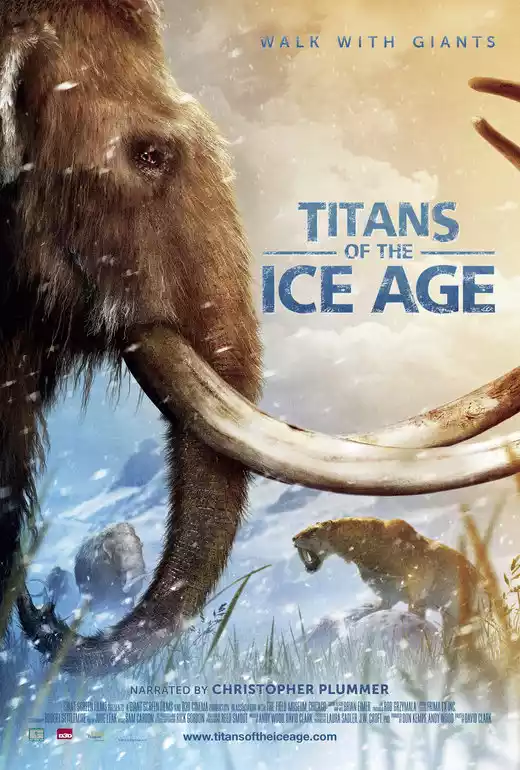
冰河时代的巨人 Titans of the Ice Age(EN)Subtitles
| SRT Subtitles download |
1 00:01:01 Twenty thousandyears ago,
2 00:01:04 the world was in the gripof an ice age.
3 00:01:18 Much of the northern hemispherewas blanketed by snow
4 00:01:23 and crushing glaciers,miles thick.
5 00:01:30 An iced earth.
6 00:01:45 Great beasts,
7 00:01:49 some familiar andsome strange, lived here.
8 00:01:55 Adapted for thepunishing cold.
9 00:02:08 This was the worldof the mammoths.
10 00:02:12 Kingdom of the titans.
11 00:02:16 An age of ice.
12 00:02:45 These bonesbelonged to giants,
13 00:02:50 but unlike dinosaurs,these animals,
14 00:02:53 shared the planet with humans.
15 00:03:00 We can only imaginetheir strange calls
16 00:03:02 that once haunted the dreamsof our ancestors.
17 00:03:11 What happened to these greatbeasts that once walked among us?
18 00:03:16 Why was extinction their fate?
19 00:03:24 The stories of their livescontinue to unfold,
20 00:03:27 as strange new creaturesare uncovered.
21 00:03:38 In 2007, a reindeer herderin northern Russia
22 00:03:43 discovered this mummifiedbaby woolly mammoth.
23 00:03:49 She had been buriedand frozen for 42,000 years.
24 00:04:14 Her skin and organs, some fur and evenher eyes are extremely well-preserved.
25 00:04:23 Her tiny tusks,not yet visible.
26 00:04:32 Named lyuba,
27 00:04:34 she is the mostintact mammoth ever found.
28 00:04:38 And a rare windowto our frozen past.
29 00:04:49 Two and a half million years ago,an ice age began with a snowflake.
30 00:04:56 One of nature'smost beautiful creations.
31 00:05:01 One by one they fell,billions upon billions.
32 00:05:05 Blanketing the north,
33 00:05:08 chilling the planet.
34 00:05:19 The pleistocene epoch, ourmost recent ice age, was born.
35 00:06:04 Our story begins near theend of the last ice age,
36 00:06:08 roughly 20,000 years ago.
37 00:06:12 It was an environmentwell suited to giants.
38 00:06:23 Woolly mammoths.
39 00:06:26 This icon of the pleistocenespread through Europe, Siberia,
40 00:06:31 and into northern partsof north America,
41 00:06:34 roaming grasslandscalled the mammoth steppe.
42 00:06:43 It is likely the herdswere constantly on the move,
43 00:06:46 seeking theirfavorite vegetation.
44 00:06:49 Individuals eatingup to 400 pounds per day.
45 00:06:58 Similar to herelephant cousins,
46 00:07:00 baby lyuba would have lived in afamily clan of about 10 members,
47 00:07:05 protected by a dominantfemale, the matriarch.
48 00:07:13 Standing up to 10 feet andweighing as much as eight tons,
49 00:07:16 woolly's huge mass helpedthem to retain body heat.
50 00:07:33 Three layers of hair and wool,a layer of insulating fat,
51 00:07:37 and small fur-lined ears alsohelped them cope with the cold.
52 00:07:49 Massive curved tusks,up to 16 feet long,
53 00:07:54 could be used as plows to reachgrass buried under the snow.
54 00:08:05 The calves were curious and playful,but vulnerable to predators,
55 00:08:09 and always under the watchful eyeof their mother.
56 00:08:27 Sometimes a male bull would challengeanother for dominance of the herd.
57 00:08:35 A clash of these titanscould be a violent affair.
58 00:09:18 Since the birth of our planet,the climate has been changing,
59 00:09:23 cycling, temperaturesrising and falling.
60 00:09:27 There have been at leastfive major ice ages.
61 00:09:32 Some may have coveredthe whole planet in ice.
62 00:09:36 Climate cycles have beenfundamentally shaped by variations
63 00:09:40 in the earth's orbitover time.
64 00:09:45 These variations alter the waythe sun strikes the earth,
65 00:09:48 and can lead to coolingon the surface.
66 00:09:53 As the ice caps grow,
67 00:09:55 they act as a mirror, reflecting moresunlight away from the shining ice,
68 00:10:00 causing heat to escapefrom the atmosphere.
69 00:10:04 So cooling speeds up,then more ice,
70 00:10:08 more reflectionand more cooling.
71 00:10:11 Greenhouse gases in the atmospheresuch as methane and carbon dioxide
72 00:10:16 counterbalance the cooling, trappingthe sun's heat like a greenhouse
73 00:10:21 around the planet.
74 00:10:24 Volcanoes can producethese gases naturally.
75 00:10:30 Plants and trees recycle thegases and keep them in check.
76 00:10:34 Too much greenhouse gas,and the planet can warm.
77 00:10:38 Too little, and it cools.
78 00:10:42 Each of these factors,the earth's orbit,
79 00:10:45 angle to the sunand atmosphere,
80 00:10:48 all work togetherto shape earth's climate.
81 00:10:53 This is theclockwork of nature.
82 00:10:56 Even the tiniest variationcan tip the scale
83 00:11:01 with profound consequences.
84 00:11:06 During our mostrecent ice age,
85 00:11:09 glaciers blanketed the north.
86 00:11:13 But most wildlifelived south of the ice sheets
87 00:11:16 on vast grassy plains.
88 00:11:22 The grasslands supportedimmense herds of grazers.
89 00:11:27 Like today,there were seasons,
90 00:11:30 but each was about16 degrees fahrenheit cooler,
91 00:11:34 and with so much waterlocked up in ice,
92 00:11:37 there was less snowfallon the plains.
93 00:11:44 Animals we know today,
94 00:11:46 lived among mammoths,mastodons and big cats.
95 00:12:00 The plains of ice age Europe,Asia and north America
96 00:12:04 were like theAfrican serengeti.
97 00:12:10 And like the serengeti,
98 00:12:12 where there are grass eaters,
99 00:12:15 there are meat eaters.
100 00:12:20 Dire wolves.
101 00:12:22 These intelligent, social carnivores,lived and hunted in packs.
102 00:12:34 At up to 150 pounds,
103 00:12:36 they were more powerfully builtthan today's gray wolves.
104 00:12:41 And they wereaggressive hunters.
105 00:12:52 The wolves are not alone.
106 00:12:57 Sabre-toothed catssmell the fresh kill,
107 00:13:00 and an opportunity.
108 00:13:22 With large curved fangs and nearly twicethe weight of a modern African lion,
109 00:13:27 they are the top predator.
110 00:14:06 During the pleistocene epoch,
111 00:14:08 so much of the earth's waterwas frozen into the ice caps,
112 00:14:12 that sea level dropped by over300 feet, connecting continents.
113 00:14:18 Many ice age animals arrivedin north America from Siberia,
114 00:14:23 over this land bridge,called beringia.
115 00:14:34 But they were not the onlyones to discover the passage.
116 00:14:45 Humans made their way to thisvast, untamed continent.
117 00:14:52 Though not physically equippedfor a harsh and bitter climate,
118 00:14:56 our intelligence,curiosity and language
119 00:14:59 allowed us to copewith new challenges.
120 00:15:13 Ice age humans were the first to leavesymbolic records of their lives.
121 00:15:21 Their drawings, mostlyfound in European caves,
122 00:15:24 evoke a world of fire and ice,
123 00:15:28 of mammoths,
124 00:15:31 bison
125 00:15:33 and horses.
126 00:15:40 As the ice age giantsdisappeared,
127 00:15:46 the bones they left behind fueledwild and chilling speculation.
128 00:15:57 Siberians imagined that hulkingskeletons rising from melting ice
129 00:16:02 must belong to giant molesthat lived in hell.
130 00:16:06 A mammoth's skull may have beenthe inspiration for the cyclops
131 00:16:11 of Greek mythology.
132 00:16:16 Even early attempts by scientiststo assemble mammoth bones
133 00:16:20 were often just as wild.
134 00:16:31 Scientists were equally confoundedby massive boulders standing alone.
135 00:16:38 After centuriesof speculation,
136 00:16:41 geologists determined that theboulders, called "erratics,"
137 00:16:45 had been carried thousandsof miles on rivers of ice,
138 00:16:49 and left behindwhen the ice melted.
139 00:16:55 And the mysterious bonesfrom mythology
140 00:16:58 belonged to extraordinaryanimals from that lost world.
141 00:17:10 One unusual place,
142 00:17:12 hidden within theice age scrub lands,
143 00:17:15 tells an exceptional, though grim, story.
144 00:17:20 Tar pits.
145 00:17:24 A columbian mammoth, lured bydrinking water, has perished,
146 00:17:28 likely from dehydrationand exposure
147 00:17:31 after getting trappedin the tar.
148 00:17:37 Its carcass is of interestto this sabre-toothed cat.
149 00:17:42 She's hungry.
150 00:17:43 A mammoth is a temptationworth the risk.
151 00:18:14 On this day, the tar hasclaimed another victim.
152 00:18:22 And the smell of deathattracts others.
153 00:18:33 For forty thousand years,countless predators and prey
154 00:18:37 were mired in this deathtrap.
155 00:18:39 Their bones sinking into andpreserved by the tarry asphalt.
156 00:18:48 Bones that continue to be pulledfrom the la brea tar pits today,
157 00:18:54 in the heartof downtown Los Angeles.
158 00:19:02 Walls now surround the tar pits to allowthe bones to be safely excavated.
159 00:19:09 These sticky deposits were naturallyformed when asphalt, deep in the earth,
160 00:19:14 gradually rose to the surface,seeping into pools.
161 00:19:21 Since 1906, more thanthree millions fossils
162 00:19:25 have been recoveredfrom over 400 species.
163 00:19:29 Making this one of the world's richestrepositories of ice age animals.
164 00:19:36 I've never seen that before.
165 00:19:42 In a glass-walled labcalled "the fishbowl,"
166 00:19:45 la brea paleontologists and volunteersseparate ice age fossils from the tar.
167 00:19:54 They're exposing the skull andjaws of their biggest find yet,
168 00:19:59 a nearly complete mammoth.
169 00:20:02 Discovered undera nearby parking lot,
170 00:20:04 the team has named him zed.
171 00:20:08 La brea's tar is an idealmedium to preserve bone.
172 00:20:13 It penetrates them, protecting everything,from the most delicate bird bone
173 00:20:18 to zed's 200-pound skull.
174 00:20:21 The bones are so saturated that tarcontinues to ooze from zed's skull today.
175 00:20:28 From the size, width and conditionof his two large molars,
176 00:20:33 they confirm zed is a male.
177 00:20:35 A columbian mammoth,
178 00:20:37 who was between 48 and52 years old when he died.
179 00:20:43 When zed's 10-foot tuskswere excavated,
180 00:20:46 they were encased in aprotective jacket of plaster.
181 00:20:50 As the plaster is removed,
182 00:20:52 the tusks are seenfor the first time
183 00:20:55 in possibly 40,000 years.
184 00:21:06 Ice age secretscome in all sizes.
185 00:21:10 As the asphalt matrix iscleaned from tar pit fossils
186 00:21:13 like this dire wolf skull,
187 00:21:16 it is sorted and what remains
188 00:21:19 is a treasure troveof tiny micro fossils.
189 00:21:23 In this spoonful of sediment are thefossilized bones from two snakes,
190 00:21:28 a mouse elbow,and the legs of two beetles.
191 00:21:32 Even plant seedsand leaves are found.
192 00:21:39 These micro fossils are a record ofwhat lived in the la brea ecosystem
193 00:21:44 40,000 years ago,
194 00:21:46 and clues to the environmentand climate at the time.
195 00:21:54 Zed may have been attracted tola brea's marsh-like setting,
196 00:21:58 unaware of its hidden dangers.
197 00:22:02 Once he stepped in,his fate was sealed.
198 00:22:17 Some creatures trapped in labrea's tar were quite bizarre.
199 00:22:23 A shasta ground sloth.
200 00:22:26 This furry plant eater roamed theAmerican west and northern Mexico.
201 00:22:33 It's massive fore claws may have helpedto fend off sabre-toothed attacks.
202 00:22:43 Though it was as bigas a black bear,
203 00:22:45 it had relatives that were 20 feetlong and weighed 6,000 pounds.
204 00:22:54 But the shasta is best known
205 00:22:57 for the unlikely climate cluesit left behind
206 00:23:01 in the darkness of caves.
207 00:23:07 Sloth dung is sowell-preserved in some caves
208 00:23:11 that it smells likefresh manure when broken open.
209 00:23:16 The content of the dung revealswhat these animals ate.
210 00:23:20 Knowing their dietand the age of the dung,
211 00:23:23 scientists can track how vegetationand climate was changing.
212 00:23:41 Larger and less hairythan their woolly cousins,
213 00:23:45 columbian mammoths rangedall across north America
214 00:23:49 and into present-day Mexico.
215 00:23:53 In some places, the warmwaters of natural hot Springs
216 00:23:56 lured them to succulentgrasses, even in winter.
217 00:24:10 But a misstep could be fatal.
218 00:24:20 There was no escape fromthese steep, slippery sides.
219 00:24:35 Over thousands of years, thehot Springs turned into this.
220 00:24:41 An ice age tombin south Dakota.
221 00:24:48 It holds the largest concentrationof mammoths ever found.
222 00:24:55 Looking like an ancientburial ground,
223 00:24:57 57 columbian mammoths,three woolly mammoths,
224 00:25:01 and 28 other ice age animalshave been discovered.
225 00:25:06 Dozens more lie buried still.
226 00:25:11 One by one,mammoths died here,
227 00:25:14 over a periodof several hundred years
228 00:25:17 near the end of the ice age.
229 00:25:23 The position of this mammoth,facing upward with limbs sprawled,
230 00:25:27 is sad witness that he diedwhile struggling to climb out.
231 00:25:42 Every bone here tells astory, like a diary.
232 00:25:46 Even ancient tusks give us informationabout the mammoth's life.
233 00:25:54 Tusks are made of a hardmaterial called dentin,
234 00:25:58 similar to our teeth.
235 00:26:01 Each year of tusk growth isrecorded in a layer of dentin,
236 00:26:05 like a tree ring.
237 00:26:08 A cross sectionof the tusk shows
238 00:26:10 that in years with goodclimate and plenty to eat,
239 00:26:14 tusks grew fasterand rings are thicker.
240 00:26:18 In times of severe weather andless food, the rings are narrow.
241 00:26:27 Mammoths grew six sets of teeth overtheir roughly 60-year lifetime,
242 00:26:32 like elephants today.
243 00:26:34 By determining whichteeth were present,
244 00:26:37 we can know the mammoth'sage when it died.
245 00:26:41 Understanding the health and ageof the mammoths helps us to know
246 00:26:45 what was happeningin their environment.
247 00:26:49 Curiously, the bones at the mammothsite reveal another interesting fact.
248 00:26:57 All of the mammoths thatperished here were young males.
249 00:27:14 Perhaps a little more adventurousand a little less cautious
250 00:27:18 than the female and adults.
251 00:27:24 Hot Springs and tar pits preservemany clues about ice age animals,
252 00:27:29 but these traps did notcause a mass extinction.
253 00:27:35 Something else was happening atthe end of the last ice age.
254 00:27:40 The world of the mammothwas warming.
255 00:27:46 Animals adapted for a cooler climatefaced a changing landscape.
256 00:27:53 Forests encroached on the grasslands,altering the food chain.
257 00:27:59 And just as a warming planetcreated ecological challenges,
258 00:28:03 another new threatto wildlife appeared.
259 00:28:40 A mammoth was no matchfor human Spears.
260 00:28:45 Mammoth gifts of food and fur and bonewere invaluable survival resources,
261 00:28:52 but our greatestadaptation to winter
262 00:28:55 was the remarkable human mind
263 00:28:58 and the ability to tamethe world around us,
264 00:29:00 to harness the power of fireand flint and bone.
265 00:29:08 Our ancestors met the coldwith a burst of innovation.
266 00:29:12 They crafted bone tools and needlesto sew clothing from hides.
267 00:29:19 Learn to paint, make music and sing.
268 00:29:33 They were creative, intelligentbeings whose language and song
269 00:29:37 gave new callsto the winter night.
270 00:29:45 What ultimately drovethe mammoths to extinction
271 00:29:49 is difficult to know.
272 00:29:51 Some speculate thatthe warming climate
273 00:29:54 reduced mammoth populationsdramatically,
274 00:29:57 just as humans arrivedto deal the final blow.
275 00:30:02 Roughly 4,000 years ago, while thepyramids were being built in Egypt,
276 00:30:08 the last mammoth perished
277 00:30:11 and the speciesceased to exist.
278 00:30:28 About 12,000 years ago,the ice began to melt.
279 00:30:33 The world's climate had shifted again,marking the end of the pleistocene
280 00:30:38 and the dawnof the holocene epoch.
281 00:30:42 Our modern climate erahad begun.
282 00:30:49 As the glaciers melted,
283 00:30:51 trickles became torrents
284 00:30:53 and north America was awash inrivers and floods.
285 00:31:06 By the endof the last ice age,
286 00:31:09 70% of the world's largestland animals had vanished,
287 00:31:15 gone forever.
288 00:31:25 A global temperature riseof just 16 degrees fahrenheit
289 00:31:28 was enough to changethe entire face of the planet.
290 00:31:34 Melt water drained back into the oceans,and sea levels rose once again.
291 00:31:41 As the glaciers melted away, thesheer power of the bulldozing ice
292 00:31:45 was revealedin newly-created geography.
293 00:31:51 Trapped inland waterpooled to form huge lakes.
294 00:31:57 The Great Lakes.
295 00:32:01 Where cathedrals of iceonce stood,
296 00:32:05 cities of steel arose.
297 00:32:09 Humans flourished.
298 00:32:13 Our population grew fromone million during the ice age
299 00:32:16 to many billions today.
300 00:32:20 Now, our industries createso much greenhouse gas
301 00:32:24 that we humans have becomeparticipants in the climate equation.
302 00:32:34 As the frozen footprint of theice age continues to shrink,
303 00:32:38 the earth is becoming warmerthan it has been
304 00:32:41 in the last 120,000 years.
305 00:32:50 Now, as at the endof the last ice age,
306 00:32:53 many animal speciesare threatened by extinction.
307 00:32:58 Wildlife againconfronts a warming climate,
308 00:33:01 habitat loss and the pressuresof a changing world.
309 00:33:15 The ice age has left behindcautionary reminders.
310 00:33:21 And as global warming melts thepermafrost of the far north,
311 00:33:25 occasionally, an entirefrozen mammoth is revealed.
312 00:33:36 Baby mammoth lyuba
313 00:33:38 was discovered whenher icy tomb melted away.
314 00:33:46 She astounded biologists
315 00:33:49 because of her completenessand incredible preservation.
316 00:33:55 Ct scans reveal that all of herinternal organs are intact.
317 00:34:03 And the discovery of mudin her throat and lungs
318 00:34:06 suggests that she diedin a shallow lake.
319 00:34:15 Lyuba was only one month oldwhen she died,
320 00:34:19 a sad fate for this youngmammoth, but a gift to us
321 00:34:24 that she has traveled 42,000 yearsto share her ice age secrets.
322 00:34:33 We visit ice age relicsand hold them in awe,
323 00:34:37 for they connect usto the past.
324 00:34:42 To look at lyubais to look back in time.
325 00:34:46 Woolly mammoths,once titans of the ice age,
326 00:34:50 are now extinct,
327 00:34:52 while we who livedamong them, live on.
328 00:34:58 Creatures from our frozen past continueto yield clues about their lives.
329 00:35:04 And the more we learn about their world,the better we understand our own.
330 00:35:10 But perhaps the greatestgift of the ice age
331 00:35:13 is neither bone nor hide.
332 00:35:16 It is our minds thathelped us survive the ice.
333 00:35:25 And only our wisdom
334 00:35:27 may guide us towarda sustainable future.
335 00:35:32 For the ice age is a climate storymore relevant now than ever.