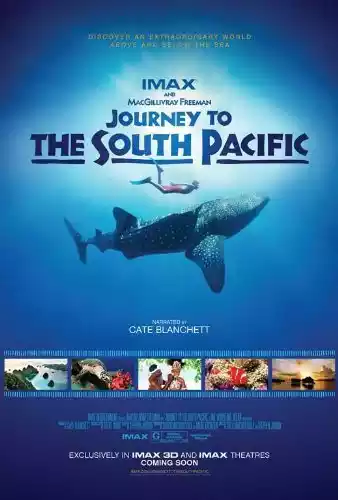
南太平洋之旅 Journey to the South Pacific(EN)Subtitles
| SRT Subtitles download |
1 00:00:41 West Papua.
2 00:00:43 Nowhere else does the sea pulse with so much life.
3 00:03:47 In West Papua,
4 00:03:48 a unique boat visits many islands,
5 00:03:51 bringing something wonderful to each.
6 00:04:35 The Kalabia is a floating school,
7 00:04:38 where children of the islands learn about the reefs
8 00:04:41 they all depend on.
9 00:04:49 A 13-year-old boy, Jawi, has been chosen
10 00:04:52 to spend the summer on this boat.
11 00:04:56 Tomorrow we'll start classes on the Kalabia.
12 00:05:00 But today we sing.
13 00:05:10 Jawi, welcome back.
14 00:05:12 My uncle Menas is a teacher on the Kalabia.
15 00:05:15 Everywhere we go, the children get so excited.
16 00:05:20 We use songs and games to teach students about the oceans.
17 00:05:33 My dad brings the old days back to life.
18 00:05:37 He makes it fun.
19 00:05:44 When he runs out of paint he uses toothpaste.
20 00:05:49 Jawi's father died when he was two,
21 00:05:52 so we took him in.
22 00:05:54 He's a foster child, but I love him like my own.
23 00:05:58 I teach him about our heritage.
24 00:06:10 The past seems strange to kids like me.
25 00:06:16 But my dad says there's wisdom in the old ways.
26 00:06:30 In our village we all depend on each other.
27 00:06:35 We belong together.
28 00:06:38 Just like these villagers.
29 00:06:50 Jawi's uncle Menas takes the Kalabia students
30 00:06:52 on field trips.
31 00:06:55 He tries to teach these children of the reef
32 00:06:57 something new about their own back yard.
33 00:07:16 There's a great diversity of healthy corals here.
34 00:07:21 But Menas shows the class that the big fish
35 00:07:24 they depend on for food are almost gone.
36 00:07:34 Corals eat tiny plants and animals
37 00:07:37 called plankton.
38 00:07:42 They're like an upside-down octopus,
39 00:07:45 grabbing food as it passes by.
40 00:07:51 I love this game.
41 00:07:53 It shows my friends how corals eat.
42 00:07:59 They reach out like coral polyps and get peanuts.
43 00:08:03 Plankton peanuts.
44 00:08:27 Tomorrow I'll be leaving on a long journey.
45 00:08:32 But I want one last day with my two best friends.
46 00:08:55 We plan our day around the tides and currents
47 00:08:59 because we can only get through here at low tide,
48 00:09:02 like right now.
49 00:09:07 Sometimes this cave fills up with water.
50 00:09:25 I don't say this to anyone,
51 00:09:29 but maybe I'm just a little bit afraid to leave home.
52 00:09:37 I'm the oldest, and kind of the leader.
53 00:09:41 The youngest is Jacob.
54 00:09:44 He's not afraid of anything.
55 00:09:47 And Gibson?
56 00:09:49 Everything we do makes him laugh.
57 00:09:54 Clams and snails live here in the mangroves.
58 00:09:59 That's what we're after.
59 00:10:11 We roast the clams and snails inside a bamboo stick.
60 00:10:16 It's good.
61 00:11:05 Fishing keeps us alive,
62 00:11:08 but the big fish are disappearing fast.
63 00:11:11 Outsiders are sneaking in and poaching our reefs.
64 00:11:15 And development is coming.
65 00:11:18 So Jawi needs to find new ways to protect our reefs.
66 00:11:28 I've never been away from home before.
67 00:11:33 Two months is a long time.
68 00:11:55 The Kalabia will take Jawi
69 00:11:57 to nine islands in West Papua.
70 00:12:02 This island chain forms a narrow funnel
71 00:12:05 between the Indian and Pacific Oceans.
72 00:12:11 Tidal currents sweep back and forth,
73 00:12:13 bearing a rich source of food.
74 00:12:21 In the old days, a boy went on a long voyage
75 00:12:24 to become a man.
76 00:12:27 I hope this trip will teach Jawi to think for himself.
77 00:12:39 Poachers once used the Kalabia to fish illegally.
78 00:12:43 It was impounded and repainted,
79 00:12:46 and now helps young islanders
80 00:12:48 understand how to care for their reefs.
81 00:12:56 My dad says, dive every reef,
82 00:12:59 because each one is different.
83 00:13:11 A seahorse.
84 00:13:13 My first.
85 00:13:20 The last time I dove this reef
86 00:13:21 there were more fish.
87 00:13:27 In all the oceans the number of big fish has dropped 90%.
88 00:13:33 And it's almost as bad for sea turtles.
89 00:13:39 So we were lucky to see one.
90 00:13:49 Like any village,
91 00:13:51 a coral reef has its fair share of characters.
92 00:13:56 This hawksbill turtle is just passing through
93 00:13:59 on her way to the island of Kalimantan,
94 00:14:02 a thousand miles away.
95 00:14:10 All her life she remains a nomad.
96 00:14:15 A hungry nomad, who avoids crowds.
97 00:14:25 Certain other characters, like the lined sweetlips,
98 00:14:29 prefer company.
99 00:14:47 Hawksbill turtles have no teeth,
100 00:14:50 just a horny beak.
101 00:14:54 But they will eat almost anything.
102 00:14:57 They never stop.
103 00:15:12 Sea turtles are disappearing,
104 00:15:14 but I told Jawi there are things we can do to save them.
105 00:15:20 The scientist on board,
106 00:15:21 Ferdiel Ballamu, is an expert on sea turtles.
107 00:15:28 Even though turtles bury their eggs in sand,
108 00:15:32 wild animals dig them up and eat them.
109 00:15:36 Sometimes, the only way
110 00:15:39 to protect the turtle eggs
111 00:15:40 is to move them to a safe place.
112 00:15:51 The next island, Arborek,
113 00:15:53 is vulnerable to storms and high tides.
114 00:15:57 Its highest point is only six feet above sea level.
115 00:16:31 The people here love their island,
116 00:16:34 and don't want to live anywhere else.
117 00:16:38 Mangroves protect beaches from storms.
118 00:16:42 That's why the Islanders plant saplings.
119 00:16:47 But even mangroves cannot protect Arborek
120 00:16:50 against rising sea levels.
121 00:16:53 The mangrove roots clean the waters.
122 00:16:57 Young fish hide here so they can grow.
123 00:17:00 The more mangroves, the more fish.
124 00:17:10 The currents that nourish the mangroves
125 00:17:13 also attract extraordinary creatures
126 00:17:15 from many miles around.
127 00:17:44 Manta rays hang in the currents like gliders
128 00:17:48 so the cleaner fish can groom them.
129 00:17:54 The rays get rid of parasites on their skin
130 00:17:57 and the fish get a tasty snack.
131 00:18:19 This ray has a big chunk missing, from a shark bite.
132 00:18:23 She lets her groomers clean the wound.
133 00:18:29 One helper even nibbles on the manta's eyeball.
134 00:18:43 In West Papua the rhythm of life
135 00:18:46 is driven by the currents.
136 00:18:51 In tight spots between the islands
137 00:18:53 the sea flows fast, like a river.
138 00:19:02 And at full moon,
139 00:19:04 that's when the currents run strongest.
140 00:19:16 These strong currents turn the seawater into plankton soup.
141 00:19:21 A real feast for the mantas.
142 00:19:41 Here, at the convergence of two great oceans,
143 00:19:45 schools of anchovies grow in size when it's time to spawn.
144 00:19:51 Attracting hungry predators.
145 00:21:36 Scientists are mapping the many deep canyons of West Papua,
146 00:21:40 where upwelling currents carry vast quantities of plankton.
147 00:21:45 All these nutrients
148 00:21:47 sustain an amazing diversity of sea life.
149 00:21:50 Over 500 different kinds of corals
150 00:21:54 and nearly 2,000 species of fish.
151 00:21:57 More than anywhere else on earth.
152 00:22:15 I'm seeing some animals I've never seen before.
153 00:22:20 Like an orangutan crab.
154 00:22:23 It makes me laugh.
155 00:22:31 The seahorse is tiny.
156 00:22:34 There's a second seahorse,
157 00:22:36 which I almost didn't spot.
158 00:22:49 Not all sharks are dangerous.
159 00:22:51 The wobbegong shark just wants to hide.
160 00:22:56 This one's pregnant, and she is as gentle as a puppy.
161 00:23:07 The Kalabia sets course for Wermon,
162 00:23:09 a nesting ground for sea turtles.
163 00:23:16 I showed Jawi one turtle,
164 00:23:18 but now he'll see some big ones.
165 00:23:20 20 times bigger.
166 00:23:27 Because of his success saving sea turtles,
167 00:23:30 Ferdiel has been invited to Wermon to share his know-how.
168 00:23:35 The turtles that nest here are huge.
169 00:23:38 So it takes a large scale to weigh them.
170 00:23:41 And it takes a large man to test the scale.
171 00:23:58 Scientists call this beach
172 00:24:01 the last stand of the Pacific leatherback turtle.
173 00:24:16 This mother swam all the way from North America,
174 00:24:19 6,000 miles, to the beach where she was born.
175 00:24:26 She will not nest anywhere else.
176 00:24:33 Red lights don't disturb her.
177 00:24:36 She can't see red.
178 00:24:40 In the past four years she has really grown,
179 00:24:43 and now weighs 500 pounds.
180 00:24:52 The mother digs a hole two feet deep,
181 00:24:55 and lays about a hundred eggs.
182 00:25:10 The newborns can walk as soon as they hatch.
183 00:25:19 They somehow imprint on this exact beach,
184 00:25:24 like setting their internal GPS.
185 00:25:29 Then they begin a dangerous journey.
186 00:25:34 Only one in 10 makes it to the sea.
187 00:25:40 Birds and lizards eat almost every baby turtle.
188 00:25:48 But sometimes you get lucky.
189 00:26:00 Despite their struggles,
190 00:26:01 sea turtles still have a chance.
191 00:26:04 New fishing equipment, like the circle hook,
192 00:26:08 is saving them by the thousands.
193 00:26:21 The Kalabia moves to the island of Misool.
194 00:26:26 Years ago, when Andy and Merit Miners
195 00:26:29 came here for the first time,
196 00:26:30 they saw big reefs all around.
197 00:26:36 But where were the fish?
198 00:26:41 The villagers were overfishing,
199 00:26:44 and the outsiders were getting their catch the easy way.
200 00:26:52 With dynamite.
201 00:26:56 To bring the big fish back,
202 00:26:58 Andy and Merit made the fisherman an offer of help.
203 00:27:02 Get the outsiders to stop dynamiting.
204 00:27:06 Limit your fishing.
205 00:27:07 And establish a permanent marine protected area.
206 00:27:17 If you work with us, your reefs will thrive.
207 00:27:21 And so will your families.
208 00:27:28 The villagers agreed, and steadily,
209 00:27:31 over the next five years, the big fish came back.
210 00:27:59 Here there are plenty of big fish.
211 00:28:03 I saw that this no-take zone was working so well
212 00:28:07 because they patrol it.
213 00:28:22 Here, the fishermen who once broke the rules
214 00:28:26 now enforce them in patrol boats.
215 00:28:29 They put a stop to illegal fishing.
216 00:28:32 And on the very spot that the poachers
217 00:28:34 once pitched their camp,
218 00:28:36 Andy and Merit build their dream.
219 00:28:40 A resort to sustain both the reefs and the islanders.
220 00:28:47 The villagers now make a better living
221 00:28:49 working with tourists who come here
222 00:28:50 to dive these revitalized reefs.
223 00:29:04 I saw how a marine protected area works,
224 00:29:07 and how to guard it.
225 00:29:14 I understood why the big fish were disappearing
226 00:29:16 from our reef at home.
227 00:29:19 And I finally knew what we could do about it.
228 00:29:27 My dad says there's wisdom in the old ways.
229 00:29:33 And a wise fisherman
230 00:29:35 always leaves some fish for another day.
231 00:29:38 That's the old way.
232 00:30:01 The stone fish.
233 00:30:03 You don't want to touch one of those.
234 00:30:07 His venom can kill you.
235 00:30:14 I learned this: protect the reef and it'll sing to you.
236 00:30:58 This colorful chorus has shown Jawi
237 00:31:00 how a well-managed reef can thrive.
238 00:31:23 Just before we left Misool,
239 00:31:25 I got a letter from home.
240 00:31:29 Learn all you can, never hold back.
241 00:31:32 We all miss you.
242 00:31:34 Love, your father.
243 00:31:41 The final stop will be Cenderawasih Bay,
244 00:31:45 where the whale sharks gather.
245 00:31:56 In all the oceans, these are the biggest sharks.
246 00:32:01 Well over 40 feet long.
247 00:32:05 There are even reports of 60-footers.
248 00:32:15 Here I'll have the chance
249 00:32:17 to dive with whale sharks.
250 00:32:21 I've never seen one.
251 00:32:26 I think they must be scary.
252 00:32:40 The harder I try not to think about whale sharks,
253 00:32:44 the more I think about whale sharks.
254 00:32:53 Uncle Menas says whale sharks won't hurt me.
255 00:32:57 I don't know.
256 00:33:12 The commercial fishermen feed the whale sharks
257 00:33:15 some of their catch to keep them hanging around.
258 00:33:19 They're considered good luck.
259 00:33:35 I wonder if they could swallow me by mistake.
260 00:36:01 Now I wonder why I was ever afraid of whale sharks.
261 00:36:11 Jawi's journey is nearly over.
262 00:36:15 But the Kalabia's work continues.
263 00:36:17 Inspiring a generation of children
264 00:36:20 to care for the ocean.
265 00:37:25 In just two months Jawi has seen
266 00:37:28 how a revitalized reef sustains itself.
267 00:37:32 And he has learned that the more you understand a reef
268 00:37:36 the better you can protect it.
269 00:37:48 We have concerns, but scientists tell us
270 00:37:51 there's no other place like this anywhere on earth.
271 00:37:56 I'm thankful that the future of our islands
272 00:38:00 belongs to the children of the reef.
273 00:38:10 pretty soon it will be up to me,
274 00:38:12 and Gibson, and Jacob.
275 00:38:16 And that's why my dad sent me on this journey.