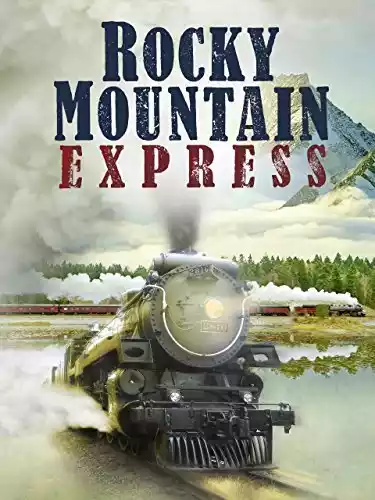
穿越落基山脉 Rocky Mountain Express(EN)Subtitles
| SRT Subtitles download |
1 00:00:08 William Cornelius Van Horne
2 00:00:11 was born on a dirt farm in Illinois.
3 00:00:16 As a young man, he was given the task
4 00:00:18 of building the longest, toughest wilderness railroad
5 00:00:21 on the face of the earth,
6 00:00:24 a task many considered impossible.
7 00:01:07 They once roamed the earth by the tens of thousands.
8 00:01:11 Their whistles spoke of distant places,
9 00:01:13 of adventure and romance.
10 00:01:19 Abandoned for decades,
11 00:01:21 what memories might still be evoked,
12 00:01:23 what spirits conjured up
13 00:01:25 from an age left behind so long ago?
14 00:02:26 Their crews considered them living things,
15 00:02:28 each with a unique personality.
16 00:02:31 Some were cranky and difficult;
17 00:02:34 others, good natured and spirited.
18 00:02:45 2816 has been resurrected
19 00:02:48 by the Canadian Pacific
20 00:02:50 in an extraordinary attempt to illuminate history itself,
21 00:02:54 to summon the spirits of the past.
22 00:03:02 They were explorers, engineers,
23 00:03:05 surveyors and guides.
24 00:03:09 They traveled by boat and foot,
25 00:03:12 packhorse and raft.
26 00:03:18 They passed through landscapes
27 00:03:19 the likes of nothing else on earth.
28 00:03:32 They fell through ice, slipped from cliffs,
29 00:03:35 died in rockslides and were lost in rapids.
30 00:03:50 They followed countless rivers
31 00:03:52 and many a promising route that ended nowhere.
32 00:04:04 For years, they searched for an ideal passage
33 00:04:06 across the vast mountain wilderness of western Canada.
34 00:04:33 Some worked too late into the fall
35 00:04:35 and were ambushed by snowstorms.
36 00:04:39 Trapped in makeshift shelters,
37 00:04:40 they struggled to survive winters
38 00:04:42 that could last over six months.
39 00:05:04 After 20 years of exploration
40 00:05:06 spanning hundreds of thousands of square miles,
41 00:05:09 at least 40 men had died
42 00:05:11 and still no ideal route had been found
43 00:05:14 through the mountains.
44 00:05:18 The province of British Columbia had joined Canada
45 00:05:21 on the condition that it would be connected to the east
46 00:05:23 by a transcontinental railway.
47 00:05:27 In desperation, the federal government began construction
48 00:05:30 beside a small church on the edge of the Fraser River
49 00:05:33 in the spring of 1881.
50 00:06:26 Departing from Vancouver, what lies ahead is
51 00:06:29 one of the longest, toughest railways on earth.
52 00:06:33 An extraordinary, 3000-mile journey
53 00:06:36 for a locomotive that first turned a wheel
54 00:06:38 over 80 years ago.
55 00:09:07 The first few miles along the Fraser River flood plain
56 00:09:10 were easy going for the builders,
57 00:09:12 at least, until the line turned north
58 00:09:14 into the jaws of the Fraser Canyon.
59 00:09:22 Hard granite walls towering 3,000 feet above the river
60 00:09:26 brought construction to a painful crawl
61 00:09:28 that would last over six years.
62 00:09:54 10,000 men worked the Fraser Canyon
63 00:09:56 in the early 1880s.
64 00:09:59 6,500 were Chinese.
65 00:10:08 They blasted night and day,
66 00:10:10 drilling tunnels into the granite rock,
67 00:10:12 carving roadbeds on the sides of vertical cliffs.
68 00:10:16 Working with hand tools and black powder,
69 00:10:19 they averaged barely five feet a day.
70 00:10:25 In these canyons, six men died for every mile of track laid,
71 00:10:31 most of them Chinese.
72 00:10:41 We can only glimpse the courage of these men
73 00:10:43 in the extraordinary work they left behind.
74 00:12:41 By 1882,
75 00:12:43 construction moved out of the Fraser Canyon
76 00:12:45 and east along the Thompson River
77 00:12:47 as the railway climbed inland
78 00:12:49 up to the central plateau of British Columbia.
79 00:12:54 Here the land becomes arid
80 00:12:56 and the rock gives way to softer sandstone.
81 00:13:03 It made for easier construction,
82 00:13:05 but this barren desert absorbs little water.
83 00:13:08 Torrential rains erode and sculpt sandstone cliffs
84 00:13:12 into hoodoos that can collapse into mudslides,
85 00:13:15 and bury the line.
86 00:13:41 Here, engineers and tracklayers
87 00:13:43 encountered a new set of obstacles
88 00:13:46 that could be neither filled, nor bridged,
89 00:13:48 nor tunneled through.
90 00:13:52 When construction crews arrived at these lakes,
91 00:13:54 they fully intended to bridge them and continue.
92 00:13:59 But when they dropped weights
93 00:14:01 attached to 400 feet of rope,
94 00:14:02 they never reached the bottom.
95 00:14:06 The lakes would be simply too deep to cross.
96 00:14:09 Trains would have to take the long route around--
97 00:14:12 as they do to this day.
98 00:14:49 Where the ground was flat and the grades easy,
99 00:14:51 General Manager Van Horne pushed hard
100 00:14:54 to make up for time and money
101 00:14:56 lost in the canyons and mountains.
102 00:15:02 They were Canadians, Americans,
103 00:15:04 British, Europeans, and Asians.
104 00:15:09 They froze in bitter cold
105 00:15:12 and toiled in fierce summer heat,
106 00:15:14 eaten raw by insects.
107 00:15:16 Yet, with bare hands,
108 00:15:19 they laid as many as six miles of track every day.
109 00:15:25 In 1882,
110 00:15:28 nearly 500 miles of track
111 00:15:30 were laid in a single season--
112 00:15:32 a world record and a source of enormous pride
113 00:15:36 for the track crews.
114 00:16:49 At the railroad town of Revelstoke
115 00:16:51 the canyons, lakes and deserts
116 00:16:53 of the interior lay behind.
117 00:16:56 Relatively easy going, compared to the Selkirk
118 00:16:59 and Rocky Mountains looming ahead.
119 00:17:11 General Manager Van Horne was an amateur geologist,
120 00:17:14 a talented artist, and an accomplished violinist.
121 00:17:19 Though he was best known
122 00:17:21 as an all-night, scotch-drinking poker player.
123 00:17:27 Perhaps his greatest gamble, however,
124 00:17:30 lay in the route chosen east of Revelstoke.
125 00:17:35 Van Horne, the CPR, and the government
126 00:17:38 were anxious to keep powerful American railroads
127 00:17:41 from moving into Southern Canada.
128 00:17:44 There were two routes through the mountains being considered:
129 00:17:47 a northern route recommended by the surveyors,
130 00:17:50 and a southern route considered much more difficult
131 00:17:53 by virtually everyone.
132 00:17:55 A fateful, perhaps reckless, decision was made,
133 00:17:57 by the railway and government,
134 00:17:59 to gamble on this southern route,
135 00:18:01 where no passes were yet known to exist.
136 00:18:06 An American surveyor by the name of A. B. Rogers
137 00:18:09 had convinced many, including Van Horne,
138 00:18:11 that he could find a southern pass
139 00:18:13 through the Selkirks.
140 00:18:16 The future of the Canadian Pacific
141 00:18:19 was now in the hands of two Americans.
142 00:18:22 One, a brilliant leader and gambler,
143 00:18:24 the other, a stubborn surveyor considered wildly eccentric.
144 00:19:41 Rogers and his guides only traveled in the spring
145 00:19:44 and summer months up the western face of the Selkirks.
146 00:19:47 Ominously, they found no evidence
147 00:19:50 that humans of any kind
148 00:19:52 had ever ventured amongst these almost vertical slopes.
149 00:19:57 In the summer of 1882,
150 00:20:00 when Rogers declared he had discovered
151 00:20:02 a viable railroad pass,
152 00:20:04 he did not fully appreciate the nature of the beast
153 00:20:07 that would come to bear his name.
154 00:20:12 When engineers and tracklayers
155 00:20:15 arrived the following season, at the foot of the Selkirks,
156 00:20:17 they were appalled
157 00:20:19 by what Rogers had declared a pass.
158 00:20:28 They would have to build massive looping trestles
159 00:20:31 to give the railway distance to lessen the steep climb
160 00:20:34 up the mountain face.
161 00:20:35 For the men working here,
162 00:20:37 it was a bad omen.
163 00:20:43 The trestles were frail,
164 00:20:45 and prone to fire in the summer
165 00:20:47 and avalanches in winter.
166 00:20:52 They were soon replaced with stone pillars,
167 00:20:55 and eventually, those too were abandoned.
168 00:21:26 In February of 1910,
169 00:21:28 the chief engineer wrote to Van Horne:
170 00:21:31 "There has been a terrible accident:
171 00:21:33 "many men died last night in the valley of the Illecillewaet.
172 00:21:37 The rest are afraid."
173 00:21:50 In the early years,
174 00:21:52 this short stretch of track
175 00:21:54 would threaten the very survival
176 00:21:55 of the entire railway.
177 00:22:04 Some thought Rogers had been more than eccentric.
178 00:22:07 His ego had led him to promote a route of total madness.
179 00:22:40 Railway surveyors seek the lowest possible route
180 00:22:44 through the mountains,
181 00:22:45 like the rivers they often parallel.
182 00:22:47 In Rogers Pass,
183 00:22:50 they used side canyons to build loops,
184 00:22:52 lengthening the line to give trains more distance
185 00:22:55 to climb the mountain.
186 00:23:06 To lower the grade further would require tunnels,
187 00:23:08 at vastly greater expense.
188 00:23:11 In 1914, work began
189 00:23:14 on the five mile Connaught tunnel,
190 00:23:17 the longest in North America.
191 00:23:19 This would reduce the grades on the old route
192 00:23:21 and hide the line from relentless avalanches.
193 00:23:31 The nine-mile Mount McDonald tunnel
194 00:23:33 followed in the 1980s,
195 00:23:35 further reducing the grades.
196 00:23:40 It would take the CPR 100 years
197 00:23:43 and 14 miles of tunnels
198 00:23:46 to finally escape beneath the original line--
199 00:23:48 the folly that was Rogers Pass.
200 00:24:57 The deep cliffs and valleys
201 00:24:58 of the eastern face of the Selkirk Mountains
202 00:25:01 were no easier for the builders.
203 00:25:06 As trains begin the long, steep, downhill journey,
204 00:25:10 they will cross a series of great bridges--
205 00:25:13 at the time of construction,
206 00:25:14 the highest in the world.
207 00:25:39 At the eastern foot of the Selkirks,
208 00:25:41 the great steam trains often paused for service
209 00:25:44 at the railway town of Golden.
210 00:25:47 The Rocky Mountains lay ahead.
211 00:26:02 The inhabitants of railroad towns
212 00:26:04 once lived to serve the appetites
213 00:26:06 of the steam locomotive.
214 00:26:08 Water, grease, oil,
215 00:26:11 coaling, running repairs, day and night,
216 00:26:14 winter and summer...
217 00:26:15 preparing them to operate
218 00:26:17 at the limit of their power.
219 00:26:31 The locomotive engineer
220 00:26:33 was the folk hero in the Age of Steam.
221 00:27:27 On the modern railway, there are two possible routes
222 00:27:30 for eastbound trains.
223 00:27:32 If the shorter main line is blocked or damaged,
224 00:27:34 trains can be diverted on an easier route south,
225 00:27:36 out of the mountains.
226 00:27:40 By 1900, the railway sought to relieve the pressure
227 00:27:43 on the main line, and the terrible grades ahead,
228 00:27:47 constructing an alternate track south, along the Columbia River,
229 00:27:50 through a pass called the Crow's Nest.
230 00:27:53 But to an already long journey,
231 00:27:55 it would add hundreds of miles.
232 00:28:03 ♪ If you miss the train I'm on ♪
233 00:28:08 ♪ You will know that I am gone ♪
234 00:28:13 ♪ You can hear the whistle blow a hundred miles ♪
235 00:28:23 ♪ Hundred miles, a hundred miles ♪
236 00:28:27 ♪ A hundred miles, a hundred miles ♪
237 00:28:32 ♪ You can hear the whistle blow a hundred miles ♪
238 00:28:43 ♪ Lord, I'm one. Lord, I'm two ♪
239 00:28:47 ♪ Lord, I'm three. Lord, I'm four ♪
240 00:28:53 ♪ Lord, I'm five hundred miles away from home ♪
241 00:29:02 ♪ Five hundred miles, five hundred miles ♪
242 00:29:07 ♪ Five hundred miles, five hundred miles ♪
243 00:29:12 ♪ Lord, I'm five hundred miles away from home ♪
244 00:29:22 ♪ Not a shirt on my back ♪
245 00:29:27 ♪ Not a penny to my name ♪
246 00:29:32 ♪ Lord, I can't go a-home this a-way ♪
247 00:29:42 ♪ This a-way, this a-way ♪
248 00:29:47 ♪ This a-way, this a-way ♪
249 00:29:52 ♪ Lord, I can't go a-home this a-way ♪
250 00:30:03 ♪ If you miss the train I'm on ♪
251 00:30:08 ♪ You will know that I am gone ♪
252 00:30:12 ♪ You can hear the whistle blow... ♪
253 00:30:15 But soon after this easy southern route was opened,
254 00:30:18 the ultimate nightmare occurred
255 00:30:20 on an April night in 1903.
256 00:30:48 At 4:30 a.m., a freight train
257 00:30:51 had just passed through the mining town
258 00:30:52 of Frank, Alberta,
259 00:30:54 when much of Turtle Mountain collapsed.
260 00:31:02 The train's brakeman, Sid Choquette,
261 00:31:04 made his way in total blackness
262 00:31:06 across rocks the size of apartment buildings
263 00:31:09 in a frantic attempt to stop an express train
264 00:31:12 coming from the east.
265 00:31:17 At the last possible moment,
266 00:31:19 he stopped the Spokane Flyer bound for Washington...
267 00:31:25 ...saving the lives of hundreds of passengers.
268 00:31:29 He received an award from the railroad of $25.
269 00:31:36 Roughly 90 souls on the edge of town
270 00:31:38 were not so lucky.
271 00:31:40 They remain buried under the slide to this day.
272 00:31:59 There would be no easy route
273 00:32:00 through these mountains after all,
274 00:32:03 but there is an easy stretch along the Kicking Horse River
275 00:32:05 before the greatest challenge of all--
276 00:32:08 the towering Rocky Mountains ahead.
277 00:32:58 The railroad town of Field is at the foot
278 00:33:01 of the steepest stretch of track in the Rockies.
279 00:33:07 In 1886, the Baldwin Locomotive Works of Philadelphia
280 00:33:09 designed a special series of locomotives
281 00:33:13 to help move heavy trains up and down the CPR's Big Hill.
282 00:33:21 These Consolidation-class engines
283 00:33:24 were enormously successful, except for number 314.
284 00:33:40 Descending the Big Hill in 1899,
285 00:33:45 314 ran away and jumped the track, killing its crew.
286 00:33:50 Rebuilt and renumbered,
287 00:33:53 but this time climbing the Big Hill,
288 00:33:56 it blew itself to pieces, killing another crew.
289 00:34:06 Repaired again, it worked up and down the Big Hill
290 00:34:08 for 30 more years,
291 00:34:11 all the time feared and despised by its crews.
292 00:34:53 The 20 miles ahead remain, to this day,
293 00:34:56 among the most challenging stretches of track
294 00:34:59 in all of railroading.
295 00:35:54 20 years after the railway was opened,
296 00:35:56 the terrible grades on the Big Hill were reduced
297 00:35:59 by one of the most famous engineering projects
298 00:36:02 in the history of railroading--
299 00:36:05 the spiral tunnels.
300 00:36:11 The tunnels give the line additional distance
301 00:36:13 to climb the steep western face of the Rocky Mountains.
302 00:36:23 Through both an upper and lower tunnel,
303 00:36:25 long freight trains cross over themselves
304 00:36:27 by looping around inside the mountain.
305 00:36:49 The Last Spike was driven at Craigellachie
306 00:36:52 in the fall of 1885-- an extraordinary accomplishment
307 00:36:56 for the tiny new country of Canada.
308 00:37:03 But soon after transcontinental trains
309 00:37:04 began running from sea to sea...
310 00:37:09 ...it was apparent the railway had profoundly miscalculated
311 00:37:11 one significant detail--
312 00:37:15 Winter.
313 00:37:32 Virtually no one had ever ventured
314 00:37:34 into Rogers Pass in the winter,
315 00:37:36 and for good reason.
316 00:37:39 It had among the deepest known snowfalls in the world--
317 00:37:42 as much as 60 feet in a single season.
318 00:38:05 On February 28, 1910, a gang of 60 men were working
319 00:38:09 to clear an avalanche in the pass.
320 00:38:12 At midnight, another slide came down
321 00:38:15 the opposite side of the valley
322 00:38:16 and killed all but one.
323 00:38:19 Most of the men were Japanese.
324 00:38:29 At least 250 men would die in avalanches in Rogers Pass alone
325 00:38:34 in the first few years of operation.
326 00:38:39 When construction began, few could have imagined
327 00:38:42 the terrible sacrifices the southern route would entail.
328 00:38:48 The new railway and the country itself
329 00:38:51 hung on the thinnest of threads.
330 00:38:53 The mountain sections were ruinously expensive to operate
331 00:38:57 and the company teetered on bankruptcy.
332 00:38:59 It would take a miracle to save the Canadian Pacific Railway.
333 00:39:14 A miracle did occur.
334 00:39:17 Just over the top of the Continental Divide,
335 00:39:20 on the east face of the Rocky Mountains,
336 00:39:22 was a place the surveyors called the most beautiful on earth.
337 00:39:27 They named it Banff.
338 00:39:45 The toughest route through the mountains
339 00:39:47 was also the most spectacular.
340 00:39:50 This simple irony would help save the railway
341 00:39:52 and perhaps the country itself.
342 00:39:57 A national park system followed the railway.
343 00:39:59 Banff, Lake Louise,
344 00:40:01 Jasper, Glacier, Yoho.
345 00:40:06 News of a wilderness Shangri-La spread around the globe,
346 00:40:09 and the company had a thriving new business: tourism.
347 00:40:18 Van Horne built a series of great hotels,
348 00:40:21 including the most famous, at Lake Louise...
349 00:40:28 ...followed by a fleet of legendary passenger trains
350 00:40:32 to bring in the tourists.
351 00:40:51 From the summit of the Rocky Mountains,
352 00:40:53 the big-wheeled Hudson locomotives ran down
353 00:40:56 the long, fast mountain slope to the prairie below.
354 00:41:00 A hundred miles an hour was routine
355 00:41:02 for the great express trains in the Age of Steam.
356 00:41:22 As the railway grew and prospered, the country followed.
357 00:41:27 Trains brought in settlers, opening up the land.
358 00:41:32 They hauled produce to market,
359 00:41:34 they built towns and cities.
360 00:41:48 They took soldiers away to war...
361 00:41:53 ...remembered by those left behind
362 00:41:56 by the sound of a lonesome wail.
363 00:42:29 Van Home's railway grew into a vast network.
364 00:42:34 The great express trains flowed day and night
365 00:42:37 across the high grass prairie,
366 00:42:40 the granite shores of Lake Superior,
367 00:42:42 the rich farmland of the St. Lawrence Valley,
368 00:42:45 and finally down to the seaport of Montreal.
369 00:43:05 Van Horne completed the impossible railroad
370 00:43:08 in half the time required by the contract.
371 00:43:12 The son of an American dirt farmer,
372 00:43:14 he rose to become one of the greatest figures
373 00:43:16 in all of Canadian history.
374 00:43:28 But here in Rogers Pass, in the valley of the Illecillewaet,
375 00:43:32 the legend of Van Horne and his railway
376 00:43:34 might have had a much different ending.
377 00:43:40 Their names are worn from wood and stone and lost forever.
378 00:43:46 They were young and strong.
379 00:43:49 With bare hands they endured unimaginable hardship.
380 00:44:16 The route chosen was nearly impossible,
381 00:44:19 yet they had faith in the future and they found a way.
382 00:44:25 We know them only by the railway
383 00:44:27 and the extraordinary country they built:
384 00:44:30 Canada.