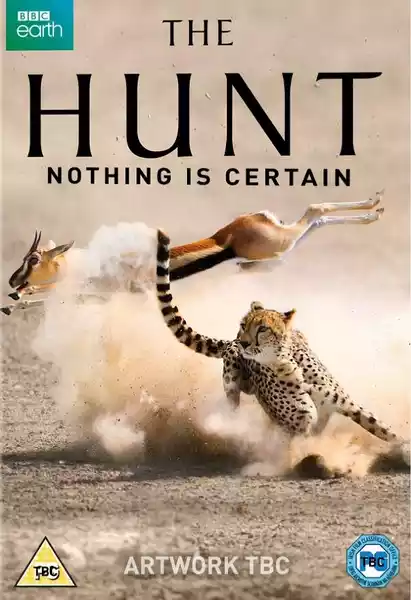
The Hunt Episode 7(EN)Subtitles
| SRT Subtitles download |
1 00:00:34 Predators give us a dramatic health check on our planet's wild places.
2 00:00:41 They are the top of the food chain
3 00:00:43 and need an abundance of prey and vast territories for hunting.
4 00:00:48 But as the human population grows,
5 00:00:51 the conflict between people and wildlife is on the rise.
6 00:00:58 Over 75% of the world's top predators are now declining.
7 00:01:04 Humans have created this crisis,
8 00:01:07 but we also have the power to resolve it.
9 00:01:12 We meet the pioneers at the front line,
10 00:01:15 searching for bold solutions.
11 00:01:22 The question is whether we are prepared to allow room
12 00:01:26 for the natural world's greatest hunters.
13 00:01:45 The world's forests cover a third of its land surface,
14 00:01:49 and contain over 50% of our wildlife.
15 00:01:57 In the jungles of India, the top predator is the tiger.
16 00:02:04 Once on the point of extinction,
17 00:02:06 its numbers are now steadily rising here
18 00:02:08 for the first time in over 50 years.
19 00:02:19 India is also home to 1.2 billion people
20 00:02:23 and the fastest-growing economy on the planet.
21 00:02:28 So, how is the tiger making a comeback?
22 00:02:36 Tigers are the largest of all big cats.
23 00:02:40 They need a territory of up to 60 square miles
24 00:02:43 and must make a kill every week to survive.
25 00:02:56 He's so perfectly camouflaged.
26 00:02:59 A deer could just come close to him without knowing the tiger's there
27 00:03:03 and he'd just go for it.
28 00:03:05 Dr Ullas Karanth from the Wildlife Conservation Society
29 00:03:09 is the world's leading expert on tigers.
30 00:03:13 Watching a tiger hunt is a dream, it's just spectacular.
31 00:03:17 You realise what a perfectly-designed killing machine this animal is.
32 00:03:51 500 years ago, there were over 300,000 tigers in India.
33 00:03:58 But in the last century, their numbers fell to just 2,000,
34 00:04:03 due to a combination of poaching and the loss of half of their forest.
35 00:04:10 In the late 1970s,
36 00:04:12 tigers were almost on the verge of extinction in India.
37 00:04:16 But strong measures by the Indian government to create protected areas
38 00:04:21 and a strong law enforcement effort led to a major recovery
39 00:04:26 better than anything else the world has seen.
40 00:04:28 As a result, tigers have come back big time in many places.
41 00:04:33 There are now around 2,500 tigers in India
42 00:04:37 and their numbers are steadily rising.
43 00:04:43 The problem now is not so much a shortage of tigers,
44 00:04:46 it's a lack of space for them.
45 00:04:50 India's human population has doubled in the last 30 years.
46 00:04:55 With so many people living in national parks,
47 00:04:58 conflict is inevitable.
48 00:05:01 These enclaves make a living out of raising crops, raising livestock
49 00:05:06 and they're competing for space and food with tigers directly.
50 00:05:10 So, this forces a conflict on them
51 00:05:14 and eventually the tigers lose out and people lose out.
52 00:05:17 The government has come up with a radical solution -
53 00:05:21 paying villagers to move out of their homes, to make way for tigers.
54 00:05:28 Relocating local people out of the forest is a highly emotive issue.
55 00:05:34 India has been strongly criticised in the past
56 00:05:37 for carrying out forced mass evictions.
57 00:05:40 It is extremely controversial,
58 00:05:43 because in some places, it's been done badly,
59 00:05:46 where people who have moved out were forcibly moved out.
60 00:05:50 But in many other places, it's been done right.
61 00:05:54 Ullas' daughter Krithi also works for the Wildlife Conservation Society.
62 00:05:59 Her job is to manage their village relocations
63 00:06:03 and make sure they're done responsibly.
64 00:06:06 KRITHI SPEAKS INDIAN
65 00:06:09 Mani and his wife Jyothi
66 00:06:11 have volunteered to leave the forest in return for compensation.
67 00:06:17 TRANSLATION:
68 00:06:33 They feel very strong ties to this place,
69 00:06:36 even though they have a very difficult life here.
70 00:06:39 And constantly living in fear of elephants, leopards and tigers.
71 00:06:44 When you have little children, those challenges are even greater.
72 00:06:50 Mani and Jyothi are leaving their old way of life behind.
73 00:06:55 India is changing very rapidly and you have to sometimes make
74 00:06:59 really hard choices and sometimes that involves moving people.
75 00:07:03 And I'm very proud of the way we've done it right,
76 00:07:05 helping them through every step of the way.
77 00:07:09 But not everyone is happy about being moved out.
78 00:07:13 HE SPEAKS INDIAN
79 00:07:28 It's the fear of the outside and unknown that is keeping them here.
80 00:07:32 Once that fear is broken
81 00:07:34 and they know they are better off, everybody wants out.
82 00:07:40 Mani and Jyothi are the latest of 631 families
83 00:07:44 to leave Nagarhole National Park.
84 00:07:49 In total, almost 30,000 people across India have been relocated.
85 00:07:57 As humans move out of the forest, tigers move in.
86 00:08:03 A very strong proof that relocation works is to look at
87 00:08:06 some of the tiger reserves where it's been done well.
88 00:08:09 People have moved out, prey numbers have multiplied
89 00:08:12 and in many cases, the tiger numbers have doubled or tripled.
90 00:08:15 There are many, many such cases in India.
91 00:08:21 Mani and Jyothi are coming to live in a newly-built relocation centre.
92 00:08:27 Here, they will have to find jobs and fend for themselves.
93 00:08:33 Each adult receives the equivalent of £10,000 -
94 00:08:36 a huge sum in India.
95 00:08:39 This is paid part cash and part in the form of a new house
96 00:08:42 and three acres of land.
97 00:08:44 TRANSLATION:
98 00:08:55 There is a widespread view that forest-dwelling people
99 00:08:58 should live in remote locations,
100 00:09:01 cut-off from all signs of civilisation,
101 00:09:03 eating fruits and nuts, and that's far removed from reality.
102 00:09:07 What these people want is good education,
103 00:09:10 modern amenities and health.
104 00:09:12 And all of that is not available in the remote jungle.
105 00:09:16 People want to live in cities
106 00:09:18 and you're going to see this huge transition,
107 00:09:20 where India is going from 70% of the country being rural
108 00:09:25 to 50% of the country being urban in the next 20 years
109 00:09:28 and this is going to open up land.
110 00:09:30 And once you move people out, the vegetation comes back,
111 00:09:33 the prey numbers rebound and then tiger numbers come back.
112 00:09:37 So, ecological recovery takes time,
113 00:09:39 but I think nature knows how to heal itself.
114 00:09:48 Relocation may be an extreme solution,
115 00:09:51 but India's tigers are proof that given enough space,
116 00:09:55 predators can bounce back.
117 00:10:02 The greatest tropical forest on Earth is the Amazon.
118 00:10:07 It covers almost half of South America
119 00:10:10 and is home to more species than anywhere else on the planet.
120 00:10:24 In the jungles of Venezuela, the canopy's deadliest hunter -
121 00:10:28 the harpy eagle.
122 00:10:37 This is the most powerful bird of prey in the world.
123 00:10:45 It has a two-metre wing-span,
124 00:10:47 and it hunts silently, on the lookout for monkeys and sloths.
125 00:10:57 HARPY EAGLE SCREECHES
126 00:11:01 The harpy eagle's territory stretches over 30 square miles.
127 00:11:06 At the heart of it, the nest, with a very hungry chick.
128 00:11:12 At two months old, the chick is vulnerable
129 00:11:15 and is fiercely guarded by her mother.
130 00:11:23 Down below on the forest floor,
131 00:11:25 others are also keeping a close watch.
132 00:11:31 Dr Alexander Blanco monitors 20 different pairs of harpy eagles,
133 00:11:36 trying to police this area of forest
134 00:11:38 and keep the nest sites safe from human encroachment.
135 00:11:45 Throughout the harpy eagle's range, across Central and South America,
136 00:11:49 an area of forest the size of Switzerland
137 00:11:52 is being cut down every year.
138 00:11:55 CHAINSAWS BUZZ
139 00:12:04 Alexander is studying the impacts of this loss on the harpy eagle -
140 00:12:09 and to do that, he must first get himself
141 00:12:12 35 metres up to the nest in the canopy.
142 00:12:16 HARPY EAGLE CHIRPS
143 00:12:18 When the chick reaches six months old, before she fledges,
144 00:12:21 Alexander must climb up and bring her down.
145 00:12:30 He'll then fit a small radio transmitter on the chick,
146 00:12:34 so he can keep track of her after she's left the nest.
147 00:12:40 The mother eagle could attack,
148 00:12:42 so Alexander is wearing a stab proof vest.
149 00:12:47 It's dangerous work,
150 00:12:49 but it's driven by a lifelong passion for the harpy eagle.
151 00:13:09 As soon as he reaches the nest,
152 00:13:11 Alexander must secure the harpy eagle's deadliest weapons -
153 00:13:15 its talons.
154 00:13:17 HARPY EAGLE SCREECHES
155 00:13:45 Today, the female is keeping her distance,
156 00:13:47 but Alexander has been attacked several times.
157 00:13:54 OK...
158 00:13:57 But as Alexander starts his descent,
159 00:13:59 he realises there's a problem with his ropes.
160 00:14:10 DULL THUD ALEXANDER SCREAMS
161 00:14:16 AMBULANCE SIREN
162 00:14:18 Amazingly, both Alexander and the eagle survive the fall.
163 00:14:24 But Alexander breaks both his wrist and his leg.
164 00:14:48 Alexander's assistant Don Blas
165 00:14:51 brings the young eagle back to camp, to keep an eye on her.
166 00:15:16 Don Blas attaches the radio as planned.
167 00:15:20 Very little is known about these eagles,
168 00:15:22 so this transmitter will help the scientists understand
169 00:15:25 how they survive in a disappearing forest.
170 00:15:33 Finally, the team return the young eagle to its nest,
171 00:15:37 under the watchful eye of her anxious parents.
172 00:15:47 The adult eagles waste no time bringing in more prey...
173 00:15:56 ..and life at the nest returns to normal.
174 00:16:11 The harpy eagle is now 18 months old.
175 00:16:14 Alexander is returning to study her progress
176 00:16:17 for the first time since his fall.
177 00:16:41 The transmitter on the eagle sends out a radio signal
178 00:16:44 and the scientists can now track her through the forest
179 00:16:47 as she learns to hunt.
180 00:16:50 TRACKING APPARATUS BEEPS
181 00:16:55 She can now recognise her prey,
182 00:16:58 but she's doesn't expect it to fight back.
183 00:17:04 But Alexander's studies show the monkeys and sloths
184 00:17:07 that form the eagle's main prey
185 00:17:09 are disappearing as the forest is cleared.
186 00:17:14 In the face of this crisis,
187 00:17:16 the harpy eagle has proved to be remarkably resourceful.
188 00:17:24 The eagles are starting to hunt ground-dwelling prey
189 00:17:27 in more broken areas.
190 00:17:48 There are now less than 50,000 harpy eagles left.
191 00:17:51 At the current rate of deforestation,
192 00:17:54 their numbers will drop by a third in the next 50 years.
193 00:17:59 The only hope is that Alexander's data
194 00:18:01 will persuade governments to protect their habitat,
195 00:18:05 even if he has to risk his life in the process.
196 00:18:15 Nearly half of the world's land surface
197 00:18:17 is covered by grasslands and deserts
198 00:18:19 and none are richer than the plains of Africa.
199 00:18:25 This vast savanna is home
200 00:18:27 to some of the most celebrated predators on the planet.
201 00:18:31 And the most celebrated of them all is the lion.
202 00:18:42 The Ngorongoro crater in Tanzania
203 00:18:45 has the highest density of lions on Earth.
204 00:18:53 There are four prides of lions here
205 00:18:55 and they're engaged in a constant war with their human neighbours,
206 00:18:58 the Maasai people.
207 00:19:10 The Maasai rely on their cattle for survival.
208 00:19:14 When the lions attack their livestock,
209 00:19:16 the Maasai retaliate by killing them.
210 00:19:23 This is an ancient conflict between warrior and predator
211 00:19:27 that's been played out for millennia.
212 00:19:36 The human population here has nearly tripled in the last 20 years
213 00:19:40 and the conflict has now reached crisis point.
214 00:19:47 Craig Packer is the world's top lion expert.
215 00:19:52 He and assistant Ingela Jansson
216 00:19:55 are trying to stop the Maasai from killing lions
217 00:19:57 and allow them to breed in peace.
218 00:20:00 Those animals have to run the gauntlet of Maasai with spears.
219 00:20:04 And so, with that kind of armed guard all the way round the crater,
220 00:20:08 it's very difficult for the males to be able to come into the crater
221 00:20:11 from somewhere else to rejuvenate this population.
222 00:20:19 Time is running out for the lions of Ngorongoro.
223 00:20:23 Craig has roughly 100 of them
224 00:20:25 and the Maasai are killing an average of ten a year.
225 00:20:29 The one with the scar, MG103 -
226 00:20:31 she had cubs in May and two of hers were lost
227 00:20:35 and I didn't even see what sex they were.
228 00:20:38 Whenever one of our study lions is speared,
229 00:20:41 it's like right, that's just one more nail in the coffin.
230 00:20:45 It's like one more example of why something must be done
231 00:20:48 to address this problem.
232 00:20:54 The only way to solve the conflict here
233 00:20:56 is by brokering peace between these two ancient enemies.
234 00:21:03 Ingela and Craig have employed a team of Maasai scouts
235 00:21:06 from within the community.
236 00:21:09 Their job is to document lion attacks
237 00:21:12 and try and stop people from retaliating.
238 00:21:17 So, I'm asking them "Do you like lions?"
239 00:21:20 And yeah, there was some murmuring "yes" but then she said,
240 00:21:23 "No, I don't like lions", because a lion attacked her son last year.
241 00:21:30 SHE SPEAKS MAASAI DIALECT
242 00:21:33 Oh, he's like 22 years old.
243 00:21:35 He went then to defend their livestock
244 00:21:38 and then he got into a close fight with a lion.
245 00:21:41 After four years of Ingela's incredible dedication
246 00:21:44 to slowly, gradually build trust with people,
247 00:21:48 people are very much are more likely to tell her what's happened.
248 00:21:51 They might even have speared a lion in retaliation.
249 00:21:54 So, she can get a better picture of what really happens here.
250 00:21:57 And therefore, how best to improve circumstances.
251 00:22:02 TRANSLATION:
252 00:22:17 Craig, Ingela and their scouts have their work cut out.
253 00:22:22 The war between people and lions has been waged here
254 00:22:26 for over two million years.
255 00:22:28 And there is one deadly tradition
256 00:22:30 that's still widely practised today -
257 00:22:34 the ritual killing of lions.
258 00:22:43 The team are travelling to a remote settlement
259 00:22:46 on the edge of the Serengeti.
260 00:22:49 MAASAI SING
261 00:22:52 This is the front line in the conflict with lions.
262 00:23:00 We've come out here today to attend a Maasai wedding
263 00:23:03 in an area that's had a lot of ritual lion killing
264 00:23:06 over the last decade.
265 00:23:07 One of the things that Ingela has learnt in her research
266 00:23:10 is that these hunting parties often assemble at an event like this.
267 00:23:18 So, as you can see,
268 00:23:19 everybody's getting worked up and that level of excitement...
269 00:23:22 It's like they've got all this energy and all that testosterone ready to go
270 00:23:26 and one of the things they really get excited about doing is going to hunt a lion.
271 00:23:30 Ingela is hoping that the presence of her scouts
272 00:23:33 may be enough to deter the warriors from hunting lions.
273 00:23:37 They know these guys, they're friends, they're relatives
274 00:23:40 and everyone knows here that they work for Lion Conservation,
275 00:23:45 so they kind of know that they can't go hunting if that person is present.
276 00:23:50 Ingela's head scout, Roimen, comes from this area.
277 00:23:54 He killed two lions by himself in ritual hunts when he was younger,
278 00:23:58 and has the respect of his fellow warriors.
279 00:24:01 ROIMEN SPEAKS MAASAI DIALECT
280 00:24:19 Today, no-one is going hunting and the lions in this area are safe.
281 00:24:25 But it could take decades to solve the conflict,
282 00:24:28 so Craig is proposing a highly controversial solution -
283 00:24:32 putting up fences to keep people and predators apart.
284 00:24:37 Our romantic visions of Africa's unspoilt wilderness -
285 00:24:40 that's already out of date.
286 00:24:42 The human population now is already one billion people.
287 00:24:45 It's expected to quadruple by the end of this century.
288 00:24:48 So, it's time to consider erecting fences between people and wildlife.
289 00:24:53 It's time to rethink the basic need
290 00:24:55 for the safety of the people around these parks
291 00:24:58 and the safety of the animals themselves.
292 00:25:02 Craig is calling for fortress conservation -
293 00:25:06 protecting vast areas with hundreds of miles of electric fencing.
294 00:25:13 In South Africa,
295 00:25:14 all the wildlife parks have already been completely fenced in.
296 00:25:20 There are now 1,000 highly protected game reserves here
297 00:25:24 and the number of top carnivores is steadily rising.
298 00:25:32 But for wide-ranging predators like cheetah,
299 00:25:35 being fenced in poses a deadly problem.
300 00:25:47 Cheetahs need vast territories to survive.
301 00:26:07 The world's fastest land animal is mainly solitary
302 00:26:10 and must roam long distances to find a mate.
303 00:26:16 But when they're trapped in behind fences with their own families,
304 00:26:20 in-breeding becomes the biggest threat to their survival.
305 00:26:29 The only way to prevent this is by playing Cupid with cheetahs.
306 00:26:42 Vincent Van Der Merwe from the Endangered Wildlife Trust
307 00:26:46 runs what could be described as a cheetah dating agency.
308 00:26:50 These population are small
309 00:26:51 and inbreeding is a terrible thing, in the long run.
310 00:26:55 So, it's not a natural thing, you know?
311 00:26:59 We'd prefer natural dispersal,
312 00:27:01 natural migration between the populations,
313 00:27:04 but South Africa is a highly-developed country
314 00:27:07 compared to the rest of Africa.
315 00:27:09 And you know, we have to move them artificially.
316 00:27:20 Vincent has come to Dinokeng Game Reserve to remove two males.
317 00:27:26 They're 18 months old
318 00:27:28 and would normally have left their mother by now.
319 00:27:30 So, these two males are related to the two females
320 00:27:34 and they're reaching sexual maturity now,
321 00:27:37 so there is the possibility that inbreeding will take place.
322 00:27:40 So, it's important that we remove these two males to prevent inbreeding.
323 00:27:45 Before they can be moved,
324 00:27:47 the cheetah must be immobilised by wildlife vet Shaun Beverley.
325 00:27:51 Let's just have a look and see.
326 00:27:53 I just want to check what these two do.
327 00:27:56 Just reverse.
328 00:28:02 Stop here.
329 00:28:04 These animals are very sensitive to drugs
330 00:28:06 and there's a high risk of overdose or injury.
331 00:28:10 OK, I'm going to take it.
332 00:28:17 Just watch the female - she's not happy at all about the vehicle.
333 00:28:20 She's quite intent in protecting her... The young male.
334 00:28:23 CHEETAH HISSES
335 00:28:25 With an eye out for the angry mother,
336 00:28:27 Shaun carefully removes the first young male.
337 00:28:30 Ready. We're just going to pop him in here.
338 00:28:33 By collecting DNA samples, Vincent creates a profile for each cheetah
339 00:28:38 and matches them up with unrelated females on other fenced reserves.
340 00:28:43 OK, got some blood vials over there.
341 00:28:48 A single population on a small fenced reserve like this
342 00:28:51 is not viable in the long term.
343 00:28:53 But 53 small populations on 53 reserves
344 00:28:58 are viable in the long term, if managed as a single population.
345 00:29:04 So, we continuously have to move these cheetah
346 00:29:06 between the 53 small fenced reserves
347 00:29:09 to ensure that they remain genetically viable.
348 00:29:14 Just support his neck here.
349 00:29:17 You can put it in as deep as you can
350 00:29:19 and just grab him from the outside and drag him through.
351 00:29:22 Just give him an antidote.
352 00:29:27 Far more comfortable, once they're awake.
353 00:29:31 CHEETAH HISSES
354 00:29:33 OK, let's go.
355 00:29:34 ENGINE STARTS
356 00:29:41 Vincent has now moved 98 cheetah.
357 00:29:45 But alarmingly, one in five of them have died in the process.
358 00:29:50 It's a terrible price to pay for conservation.
359 00:29:53 A small box, it's a very, very confined space for a cheetah.
360 00:29:57 We don't like to keep them there too long.
361 00:29:59 Unfortunately, some of the reserves are really far from each other
362 00:30:02 and we have to move them over a day or two.
363 00:30:05 So, we really fear for them,
364 00:30:07 and we lose a lot of cheetah because of chronic stress.
365 00:30:11 CHEETAH HISSES
366 00:30:16 The two brothers are travelling 100 miles to their new home,
367 00:30:21 Sable Ranch, where they will stay for the rest of their lives.
368 00:30:25 Plenty of cheetah food over here.
369 00:30:34 These two young cheetah have survived their journey unscathed.
370 00:30:40 They are doing 100%, just a case of opening up now.
371 00:30:44 CHEETAH HISSES
372 00:30:54 Vincent will soon bring in a female, so they can start a family.
373 00:30:59 When their offspring have reached adulthood,
374 00:31:01 they'll need to be moved to another reserve.
375 00:31:04 It's never-ending work.
376 00:31:10 There are now less than 10,000 cheetahs left.
377 00:31:15 South Africa is the only country where the population is growing,
378 00:31:19 thanks to human intervention.
379 00:31:22 But at what cost?
380 00:31:25 Will all of Africa's wildlife end up living on fenced private reserves?
381 00:31:33 I really think that this is going to be the future of conservation,
382 00:31:36 because we're not going to find wide open spaces in Africa any more.
383 00:31:39 There's just too many people, too much development.
384 00:31:42 But we will find small fragments of natural habitat
385 00:31:45 where we can reintroduce cheetah.
386 00:31:47 So this is really a way to increase the range of cheetah,
387 00:31:51 to beef up their numbers,
388 00:31:52 because in the rest of Africa, their numbers are going down.
389 00:32:07 There is at least one place left in Africa
390 00:32:11 where you can still find wide open spaces.
391 00:32:16 Zambia.
392 00:32:22 With over 100,000 square miles of untamed wilderness,
393 00:32:26 Zambia is simply too large to fence in.
394 00:32:32 One hunter needs this vast landscape more than any other
395 00:32:36 and it's the most endangered of all the predators on the plains.
396 00:32:42 The African wild dog.
397 00:32:51 Wild dogs are highly social animals.
398 00:32:56 Before hunting, they carry out a greeting ritual,
399 00:32:59 reinforcing bonds within the pack.
400 00:33:05 They also care for their old and injured,
401 00:33:07 making sure no dog goes hungry or gets left behind.
402 00:33:13 But these greetings are becoming a rarity.
403 00:33:16 Wild dogs have lost over 90% of their former range
404 00:33:20 and there are now just 6,000 remaining in the whole of Africa.
405 00:33:26 Mike Bravo, go ahead.
406 00:33:27 Yeah, we have the hot springs pack just upstream.
407 00:33:31 Copy that, going there right now.
408 00:33:33 It's five o'clock in the morning
409 00:33:35 and a team from the Zambian Carnivore Programme
410 00:33:38 are tracking a pack of wild dogs.
411 00:33:41 Their study animals are getting caught
412 00:33:43 in the crossfire of a war with illegal poaching
413 00:33:46 and Thandive and Henry are trying to keep watch over them.
414 00:33:50 It's a huge area and to look for animals like that
415 00:33:53 is like looking for a needle in a haystack
416 00:33:56 and worse still, these dogs are moving at really high speeds.
417 00:34:00 They're heading out hunting, huh?
418 00:34:03 They're joined on their search by air support.
419 00:34:07 Team leader Dr Matt Becker is spotting from above,
420 00:34:11 trying to work out which direction the dogs are heading.
421 00:34:15 Tango Mike, Tango Mike, Mike, Bravo.
422 00:34:17 Mike Bravo, go ahead.
423 00:34:20 Yeah, we have the hot springs pack -
424 00:34:22 got a visual, all 15 of them, just upstream from the Kalousie.
425 00:34:27 Copy that, we'll head there right now and try to keep up as best as we can.
426 00:34:31 OK, sounds good.
427 00:34:36 Wild dog territories stretch over 600 square miles.
428 00:34:41 They're constantly on the move,
429 00:34:43 so the scientists track them using radio collars.
430 00:34:47 If you don't follow them on the ground for a couple of days,
431 00:34:50 you often have no idea where they may be.
432 00:34:53 So the quickest, easiest thing to do is get up in the air
433 00:34:56 and pick up the signal from a long ways away,
434 00:34:58 and then, we'll radio those locations to our ground teams,
435 00:35:03 who will come in with their Land Rovers
436 00:35:05 and follow the dogs on the ground
437 00:35:07 and collect all sorts of critical information on them.
438 00:35:10 Mike Bravo, I copy that.
439 00:35:13 Do you have the location right now?
440 00:35:16 Yeah, I've got them. 11 o'clock, moving in now.
441 00:35:24 Oh, that's great.
442 00:35:29 The team observe the pack hunting almost every day.
443 00:35:35 Once they've selected their target, it's all about teamwork.
444 00:35:45 When they actually encounter wildebeest or other prey,
445 00:35:48 you'll see them reacting to where the other dogs are running as well.
446 00:35:52 They are very aware of what's going on
447 00:35:54 and what their other pack members are doing.
448 00:36:03 You know, they take down wildebeest
449 00:36:05 that one dog can't possibly do by itself,
450 00:36:07 so through working together and helping each other out,
451 00:36:10 they're able to take down big animals like that.
452 00:36:23 No matter how many times I see a wild dog hunt, it's always amazing.
453 00:36:28 The grace and speed of the dogs in a hunt
454 00:36:31 is something that you can't get with any other species.
455 00:36:47 There's nothing like wild dogs
456 00:36:49 and if we lose them, there will never be anything like them again.
457 00:36:57 The greatest threat to wild dogs comes from humans.
458 00:37:05 The dogs are getting caught in snares intended for other animals.
459 00:37:10 Zambia's growing population is creating a huge
460 00:37:13 and increasing demand for commercial bushmeat,
461 00:37:16 with poachers targeting species like gazelles.
462 00:37:21 But snares are indiscriminate
463 00:37:24 and thousands of other animals are caught by accident.
464 00:37:32 With the dogs in constant danger,
465 00:37:34 the team keeps an eye on them, in case they get caught in snares.
466 00:37:41 To follow the dogs, they need to collar only one animal,
467 00:37:44 as they normally stick together as a pack.
468 00:37:49 WILD DOG YELPS
469 00:37:53 Once the dog is safely down, the team can slowly move in.
470 00:38:02 A lot of them are getting snared.
471 00:38:04 And so, these radio collars enable us to get an animal,
472 00:38:07 find it and de-snare it.
473 00:38:09 So, this collar may save this dog's life,
474 00:38:12 it may save its brothers and sisters and other pack members.
475 00:38:16 So, once the pack member is down, the other dogs will stay in the area.
476 00:38:20 As you can see, some in the background -
477 00:38:23 so that makes it easier for the immobilised dog to join the group
478 00:38:26 after the drugs wear off.
479 00:38:30 When he comes round, the young male is unsteady on his feet,
480 00:38:34 but he soon catches up with the rest of the pack.
481 00:38:41 I think the best sight of the whole darting
482 00:38:44 is when the dog gets up and rejoins the pack.
483 00:38:48 It doesn't get any better than that.
484 00:38:56 The team are searching for a pair of females that they're worried about.
485 00:39:02 It's not unusual for females to leave the pack
486 00:39:05 to look for new males,
487 00:39:07 but these two sisters have run into trouble.
488 00:39:12 A few weeks ago, we de-snared one of the females -
489 00:39:15 she had a snare around her waist
490 00:39:17 and was actually one of the worst we've ever seen.
491 00:39:21 If you look very closely, you can also see just where the wire was.
492 00:39:27 Her sister's also got an injured back leg.
493 00:39:30 We can't see any open wounds at the moment,
494 00:39:33 but she's clearly not putting any weight on it at all.
495 00:39:36 And that does not bode well for them,
496 00:39:38 when it comes to hunting, looking for food.
497 00:39:41 Looks like they have not eaten for a while, now.
498 00:39:44 They look very thin.
499 00:39:46 I don't think they have a good chance of survival.
500 00:39:49 We will keep monitoring them and see how it goes.
501 00:39:52 It's going to be difficult. We might just end up picking up
502 00:39:56 two empty collars in the next few weeks.
503 00:39:59 Sadly, the snared female doesn't make it
504 00:40:02 and is found dead a month later,
505 00:40:05 but her sister manages to join another pack.
506 00:40:10 Matt's team works closely with anti-poaching patrols
507 00:40:13 from the South Luangwa Conservation Society
508 00:40:16 and the Zambian Wildlife Authority,
509 00:40:19 looking for snares and searching vehicles for bushmeat and guns.
510 00:40:25 But as always, the greatest weapon in the war against poaching
511 00:40:30 is the next generation.
512 00:40:32 HENRY SPEAKS AFRICAN DIALECT
513 00:40:41 This is conservation club.
514 00:40:44 Every week, Thandi and Henry take children on safari,
515 00:40:48 so they can appreciate wildlife and the opportunities it brings.
516 00:40:52 How many people have seen wild dogs before?
517 00:40:56 They hunt in packs of course,
518 00:40:58 and they prefer to chase the animal down.
519 00:41:01 Probably the most important aspect of our work
520 00:41:04 is ensuring that the people that are most responsible for conservation
521 00:41:07 of wild dogs and wild life in general are the Zambians themselves.
522 00:41:11 Henry and Thandi are fantastic and are continuing
523 00:41:14 to help kids get engaged in wildlife conservation.
524 00:41:17 For those of you that have never seen a snare before,
525 00:41:20 this is what it looks like.
526 00:41:22 The mechanism is so that it should tighten
527 00:41:24 as the animal struggles to get away.
528 00:41:27 The best thing that can come out of this is a generation of people
529 00:41:31 that are interested in wildlife.
530 00:41:33 Regardless of what field they join later on -
531 00:41:36 they could be teachers, or bankers, or whatever -
532 00:41:38 but just environmentally-minded people.
533 00:41:42 The animals are important, because they are the sources of income
534 00:41:47 that can develop our Zambia - our nation.
535 00:41:52 When I grow up, I just want to teach people about wildlife.
536 00:41:57 Just like Mr Henry do.
537 00:42:17 Oceans cover over 70% of the planet.
538 00:42:25 This immense blue wilderness
539 00:42:27 is home to the largest predator that's ever lived...
540 00:42:37 ..the blue whale -
541 00:42:39 up to 30 metres long and weighing 200 tonnes.
542 00:42:59 Since commercial whaling was banned 30 years ago,
543 00:43:04 off the coast of California,
544 00:43:06 its numbers have almost fully recovered.
545 00:43:11 But they face a new problem.
546 00:43:17 Here, blue whales are feeding on krill,
547 00:43:20 in one of the world's busiest shipping lanes.
548 00:43:26 Container ships plough through these waters 24 hours a day,
549 00:43:31 heading in and out of Los Angeles.
550 00:43:40 When the bow strikes a whale, it's usually fatal.
551 00:43:46 Some scientists have suggested that this could be one reason
552 00:43:50 why the blue whale population here is not increasing.
553 00:43:56 But proving it requires very challenging research.
554 00:44:02 So, we'll go through the area where we've had the sightings
555 00:44:06 and it looks like both those whales moved last night
556 00:44:08 to the shipping lanes, right in that zone...
557 00:44:11 On the MS Shearwater in LA harbour,
558 00:44:14 a team of marine biologists are heading out to hunt for blue whales.
559 00:44:18 Their mission is to investigate the impacts of ship strike.
560 00:44:31 I think we'll have a chance at this angle -
561 00:44:34 it looks like he's back into
562 00:44:35 a little bit more of a travelling mode.
563 00:44:38 John Calambokidis from Cascadia Research
564 00:44:41 is the world's top expert on blue whales
565 00:44:44 and has been studying them for 29 years.
566 00:44:47 I first became aware of the ship strike issue in 2007,
567 00:44:51 when we had at least four blue whales that were struck
568 00:44:54 and killed by ships just in Southern California in a few months' period.
569 00:45:11 The port of Los Angeles Long Beach
570 00:45:14 is the largest shipping complex in the United States.
571 00:45:18 Container traffic here has increased ten-fold in the last 30 years.
572 00:45:26 This spot right here probably has
573 00:45:28 some of the densest concentration of ships
574 00:45:30 that will funnel through here, coming into Los Angeles Long Beach.
575 00:45:34 This also, right here, is a canyon
576 00:45:37 that has quite a bit of krill for blue whales to feed on.
577 00:45:40 And we've often got concentrations of blue whales
578 00:45:43 right in this same area.
579 00:45:51 John is tagging a number of whales
580 00:45:53 to see how they respond to the ships.
581 00:45:56 Right now, we have a whale that's in the shipping lane,
582 00:46:00 so we're going to try to take this opportunity
583 00:46:02 to put a tag on this whale,
584 00:46:04 monitor both what it's doing and get the reaction of the whale.
585 00:46:15 Deploying a suction cup tag requires precision timing.
586 00:46:21 This first critical point, till you figure out what a whale's doing,
587 00:46:25 it's very easy to lose it.
588 00:46:28 Right now, there's a little bit of pressure.
589 00:46:35 He may come up again here.
590 00:46:37 Yep, here he comes.
591 00:46:43 All right! Let's go.
592 00:46:48 Coming up.
593 00:46:57 OK, nice job there.
594 00:47:01 So, that's attached with a suction cup.
595 00:47:04 We hope it will stay on
596 00:47:05 for something of the order of a few hours.
597 00:47:11 These modern day whalers with hi-tech harpoons
598 00:47:15 are hunting for new information about the whales' behaviour
599 00:47:18 and why they don't simply swim out of harm's way.
600 00:47:23 Blue whales don't seem to respond very strongly to the ship presence.
601 00:47:27 You think about a long ship,
602 00:47:29 the engine of that ship that's generating the noise
603 00:47:31 and the propeller are all the way at the far end.
604 00:47:34 What might be of danger to the blue whale
605 00:47:36 might be 300 metres in front of that.
606 00:47:44 The tags reveal how much time the whales spend in the shipping lanes,
607 00:47:49 especially at night.
608 00:47:52 The first thing that's rather surprising
609 00:47:54 is that the whale crosses the shipping lanes twice.
610 00:47:56 And we see that the blue whales are spending
611 00:47:59 about twice as much of their time at night near the surface,
612 00:48:01 where they will be vulnerable to being struck by a ship,
613 00:48:04 compared to the day time.
614 00:48:08 John is now working with the authorities
615 00:48:10 to try to divert the shipping lanes and slow the vessels down.
616 00:48:18 All sides are keen to find a solution
617 00:48:21 and allow the whales to feed in peace.
618 00:48:40 The polar regions are the least-inhabited
619 00:48:43 and the most remote wildernesses on Earth.
620 00:48:49 Here in the Arctic, the top predator is the polar bear.
621 00:48:55 Over almost half a million years, these bears have adapted to
622 00:48:59 the Arctic's dramatic annual changes of season.
623 00:49:08 They're the only predators to hunt on sea ice
624 00:49:12 and they rely on it for almost all of their prey.
625 00:49:28 But due to changes in the global climate, the ice is getting thinner.
626 00:49:36 And their season for hunting is getting shorter.
627 00:49:46 To prove this is happening, you need hard evidence.
628 00:49:49 And there's one team of scientists
629 00:49:51 who've been collecting that evidence for the last 30 years.
630 00:49:59 What is that?
631 00:50:01 It might be a swan.
632 00:50:02 - Oh, just this side of the ridge?- Yeah.
633 00:50:04 In West Hudson Bay in Northern Canada,
634 00:50:07 Government biologists are carrying out
635 00:50:09 the world's longest study on polar bears.
636 00:50:14 Oh, there's a bear, right below me - holy smokes.
637 00:50:16 I think if I was going to do this guy, I'd try to get on his left
638 00:50:19 and just push up onto this ridge here.
639 00:50:21 If we get him on this ridge, I think we're laughing.
640 00:50:28 The scientists are like health visitors for bears,
641 00:50:31 checking the pulse of the local population.
642 00:50:35 For Dr Evan Richardson, summer is the perfect time to call.
643 00:50:39 As the bears are resting on land right now,
644 00:50:42 living off their stored fat reserves, waiting for the sea ice
645 00:50:46 to come back in the fall, in November and December,
646 00:50:49 it really gives us a good opportunity
647 00:50:51 to come and study this particular population of bears.
648 00:50:57 The bears need to be immobilised
649 00:50:59 before the biologists can get to work.
650 00:51:02 I'll just keep pushing him in the direction he's headed now, OK?
651 00:51:05 Dr Nick Lunn's team has darted over 5,000 bears
652 00:51:08 since the project first started.
653 00:51:11 That bear's going into the water.
654 00:51:13 It's a place they consider safe, they head out to sea.
655 00:51:16 And we don't want to be darting him in the water,
656 00:51:19 so we need to move him back out where we can get a safe shot
657 00:51:22 and have him go down on the land.
658 00:51:32 Though it's stressful for the individuals in the short-term,
659 00:51:35 this research could help save the entire species in the long-term.
660 00:51:48 Once the dart is in,
661 00:51:49 the crew wait at a safe distance until the bear is down.
662 00:52:02 They must be extremely cautious when leaving the helicopter.
663 00:52:10 Working around polar bear country, one always has to be vigilant
664 00:52:13 and aware that there are other bears around -
665 00:52:15 they're curious, they're going to come in.
666 00:52:18 We have firearms, as a protective measure, just in case of an incident.
667 00:52:24 Let's see if we can reposition him - which might be easier said than done.
668 00:52:29 The team have to work fast.
669 00:52:32 Once the anaesthetic wears off,
670 00:52:35 this bear will quickly become very dangerous.
671 00:52:43 This bear was first caught back in 2003
672 00:52:46 and he's got about another ten capture histories.
673 00:52:50 We collect hair samples, we'll take fat samples,
674 00:52:54 we'll take a few standard measurements.
675 00:52:57 Head length - 343.
676 00:53:01 So now, we're going to get a straight line body length of this bear.
677 00:53:04 233.
678 00:53:07 His canines are one. Tooth wear is one.
679 00:53:12 By updating their health records each year,
680 00:53:15 the team can keep an eye on this bear's condition.
681 00:53:19 The number is 016.
682 00:53:22 Typically, male bears would be
683 00:53:24 10% larger than this particular individual,
684 00:53:26 so the bears are actually shorter,
685 00:53:29 smaller than they used to be in the 1980s and 1990s.
686 00:53:32 We believe it's probably related to nutritional stress
687 00:53:36 and the population and reduced access to food.
688 00:53:41 The bears are going hungry
689 00:53:43 because the winters here have become warmer and shorter
690 00:53:47 and the summers longer and hotter.
691 00:53:51 The bears need to see ice as a platform to hunt their prey,
692 00:53:55 to travel, they mate out on the sea ice,
693 00:53:58 but we see sea ice breaking up
694 00:54:00 around two and a half to three weeks earlier
695 00:54:03 and forming around two and a half to three weeks later,
696 00:54:06 so the bears have less time to feed.
697 00:54:08 They're thinner, they don't have the same amount of fat on their bodies.
698 00:54:12 We're seeing fewer cubs being produced, declines in cubs' survival,
699 00:54:16 bears coming ashore in poor condition,
700 00:54:18 weighing a lot less now than they did 30 years ago.
701 00:54:24 The scientists can now prove that these bears are, on average,
702 00:54:29 20% smaller than when their study first started.
703 00:54:32 If the loss of ice continues,
704 00:54:34 the polar bear will gradually become extinct.
705 00:54:46 Climate change is happening fairly rapidly,
706 00:54:49 so even though these bears are really good at fasting
707 00:54:51 and living off their body reserves and going long periods without food,
708 00:54:55 what we're seeing is, we're starting to push these bears
709 00:54:58 to their physiological limits,
710 00:55:00 and as they're pushed to the limits of their body reserves,
711 00:55:02 obviously, that has implications for their survival.
712 00:55:08 More than any other predator,
713 00:55:10 the polar bear has evolved to cope
714 00:55:12 with dramatic changes in the Arctic seasons.
715 00:55:16 But with the current pace of climate change,
716 00:55:19 the bears simply cannot adapt fast enough.
717 00:55:24 If polar bears are to survive,
718 00:55:27 we will all have to play our part.
719 00:55:39 DR ULLAS KARANTH: If people do smart things,
720 00:55:42 like different ways of producing energy,
721 00:55:44 I think we will have room for large predators
722 00:55:47 as well as people living really well.
723 00:55:51 - JOHN CALAMBOKIDIS:- If humans are going to survive on this Earth
724 00:55:54 and do so in harmony with other species,
725 00:55:56 we're going to have to find a more sustainable way to live than we do,
726 00:55:59 and a lot of that is going to have to involve
727 00:56:01 lower levels of consumption.
728 00:56:03 We have to accept the fact that
729 00:56:04 we can't just blindly go on the trajectory we're currently on
730 00:56:07 and expect things to work out well.
731 00:56:09 We've got to make changes.
732 00:56:12 CRAIG PACKER: We need to start thinking about the ways
733 00:56:15 the whole world can contribute.
734 00:56:17 These precious animals belong to all of us.
735 00:56:19 These are a world resource
736 00:56:21 and the world as a whole should guard these animals against poachers,
737 00:56:25 habitat loss and protect them into the future.
738 00:56:32 If we can't save the planet's most charismatic predators,
739 00:56:36 what hope is there for the rest of the natural world?
740 00:56:42 Wildlife has the power to recover
741 00:56:45 and people have the power to change.
742 00:56:48 What happens next depends on us.
743 00:57:08 For a free interactive Open University poster, call...
744 00:57:16 ..or go to...
745 00:57:20 ..and follow the links to the Open University.